


Click the sections below to read winter highlights from this 2025 – 2026 season!



RESEARCH AND MONITORING
Murrelet Survey in the Western Midriff Island Region
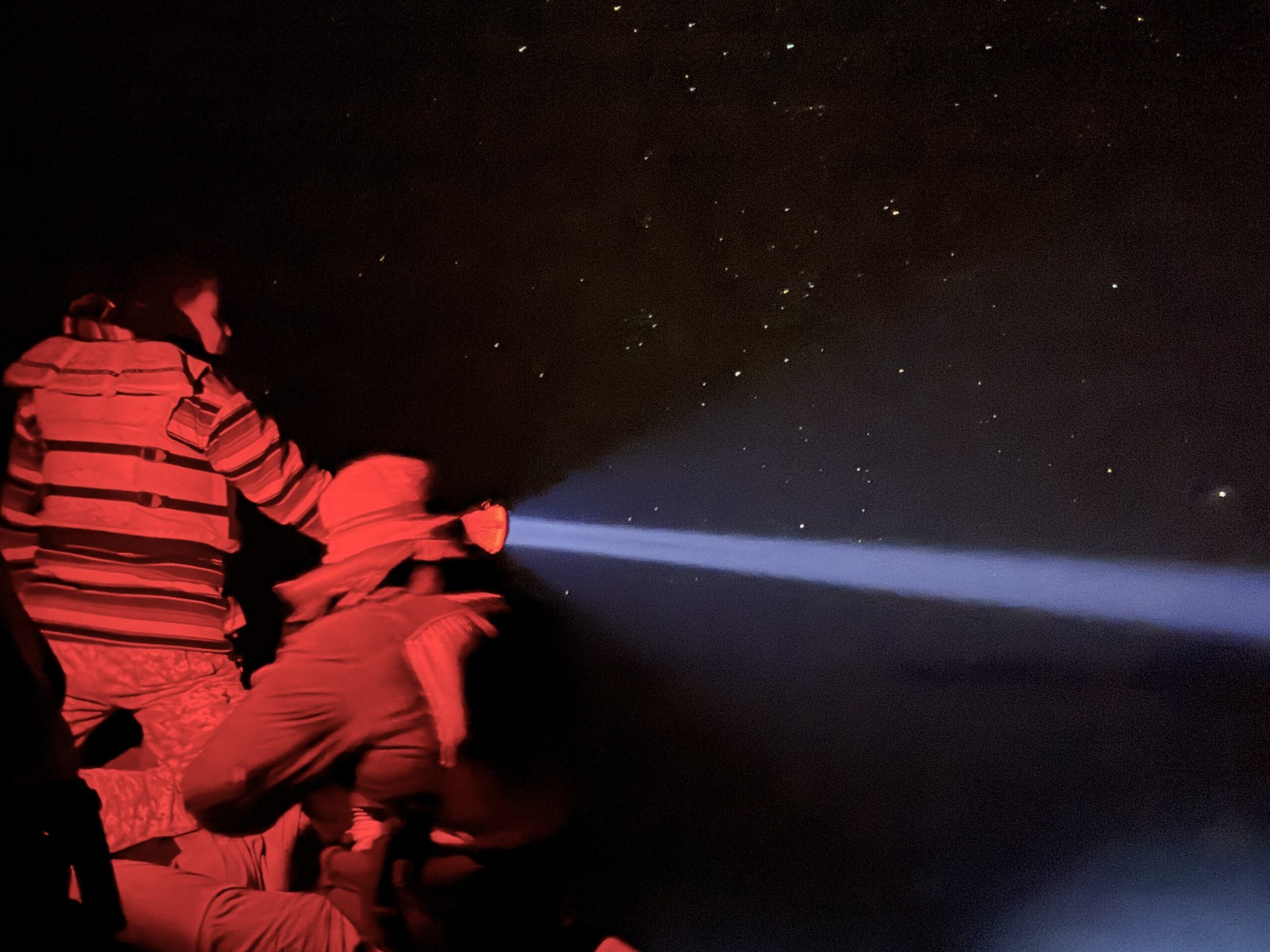
WMP Coordinator Jaime Martínez searching for murrelets at sea using a spotlight
Andy Galindo/Kino Bay Center
Our Waterbird Monitoring Program’s favorite bird was literally in the spotlight this February as they conducted nocturnal surveys on this enigmatic species in the western Midriff Island region. Beneath a starlit sky and atop a sea illuminated by bioluminescence, the researchers, alongside a group of students and volunteers, conducted nocturnal spotlight surveys around Islas Rasa, Salsipuedes, Animas, and Partida. Nocturnal surveys around islands with nesting colonies help estimate the number of nests and population size. This method is especially helpful for islands that may not be completely accessible on foot.
After conducting the at-sea nighttime survey the team took to the rocky shores of Isla Rasa in daylight to continue the search, this time using flashlights to gain a better view of the crevices in which Murrelets lay their highly camouflaged eggs.
The search for Murrelet eggs is a strenuous activity which consists of scaling cliffsides and locating appropriate crevices amongst the island’s seemingly infinite amount of rocks, but it’s worth it to our team of researchers who conduct this survey in hopes of finding out more about the little-studied behavior and breeding patterns of the Craveri’s murrelet in the Gulf of California.

The survey team conducting a search on Isla Rasa
Andy Galindo/Kino Bay Center
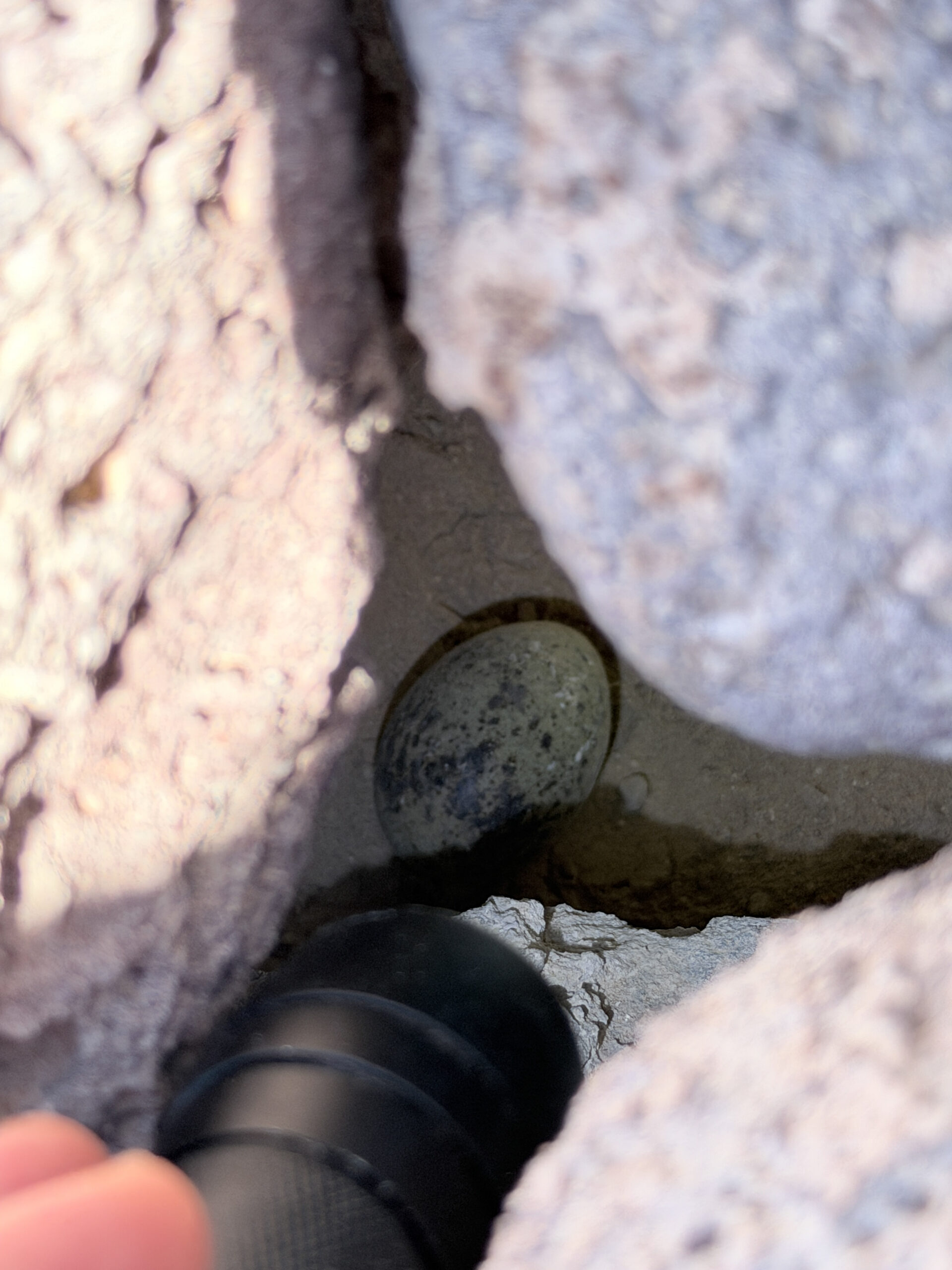
A murrelet egg hidden in a crevice
Andy Galindo/Kino Bay Center
“We are always eager to discover more about this elusive species since many breeding records are outdated, and they are not the easiest species to study. Hopefully this project will help us better understand the status of these populations in the Gulf and better guide future management initiatives,” says Lauren Dolinski, Waterbird Monitoring Program Coordinator.
Marine Mammal Monitoring: Conclusions So Far
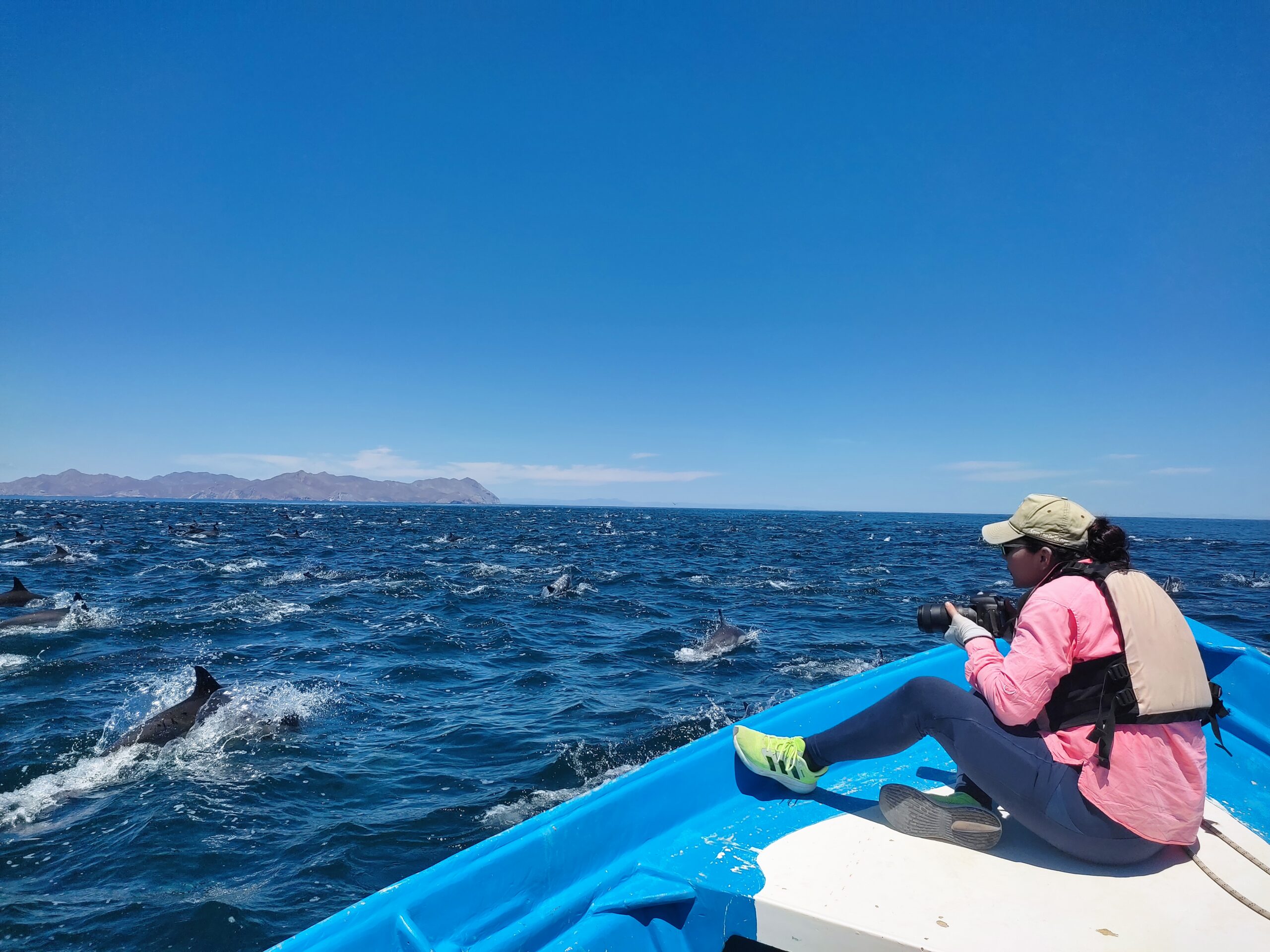
MMP fellow Gaby Salazar observing dolphins in the Canal del Infernillo
Kino Bay Center
The Center’s Marine Mammal Monitoring Program continues to conduct weekly monitoring sessions in the Gulf of California, patiently scanning the open sea hoping to see one of the 17 species of marine mammals registered by the Center in the region. Their field research so far this winter has led to the following conclusions:
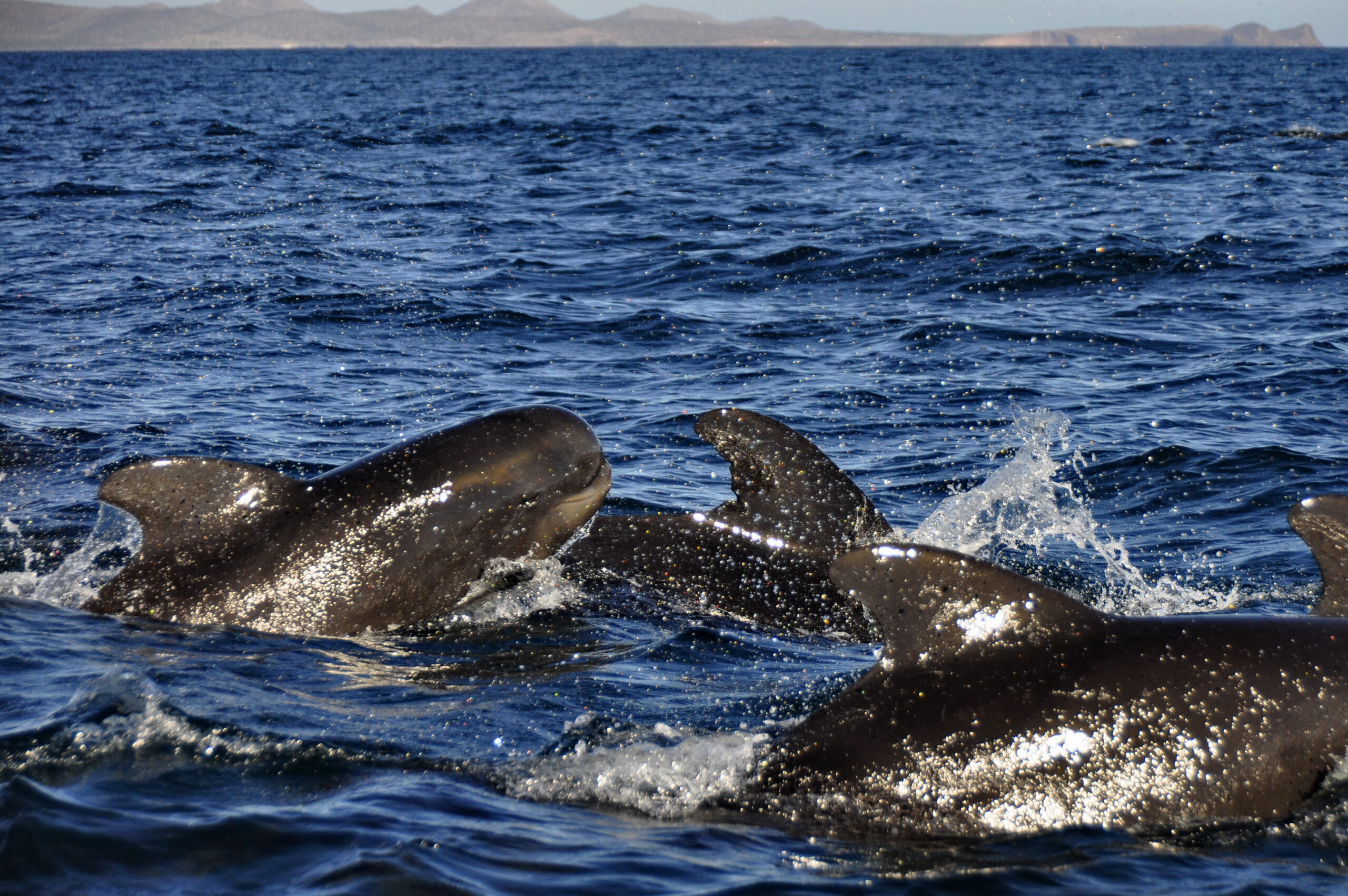
Short-finned pilot whales in the Gulf of California
Kino Bay Center