
Click the sections below to read winter highlights from this 2025 – 2026 season!
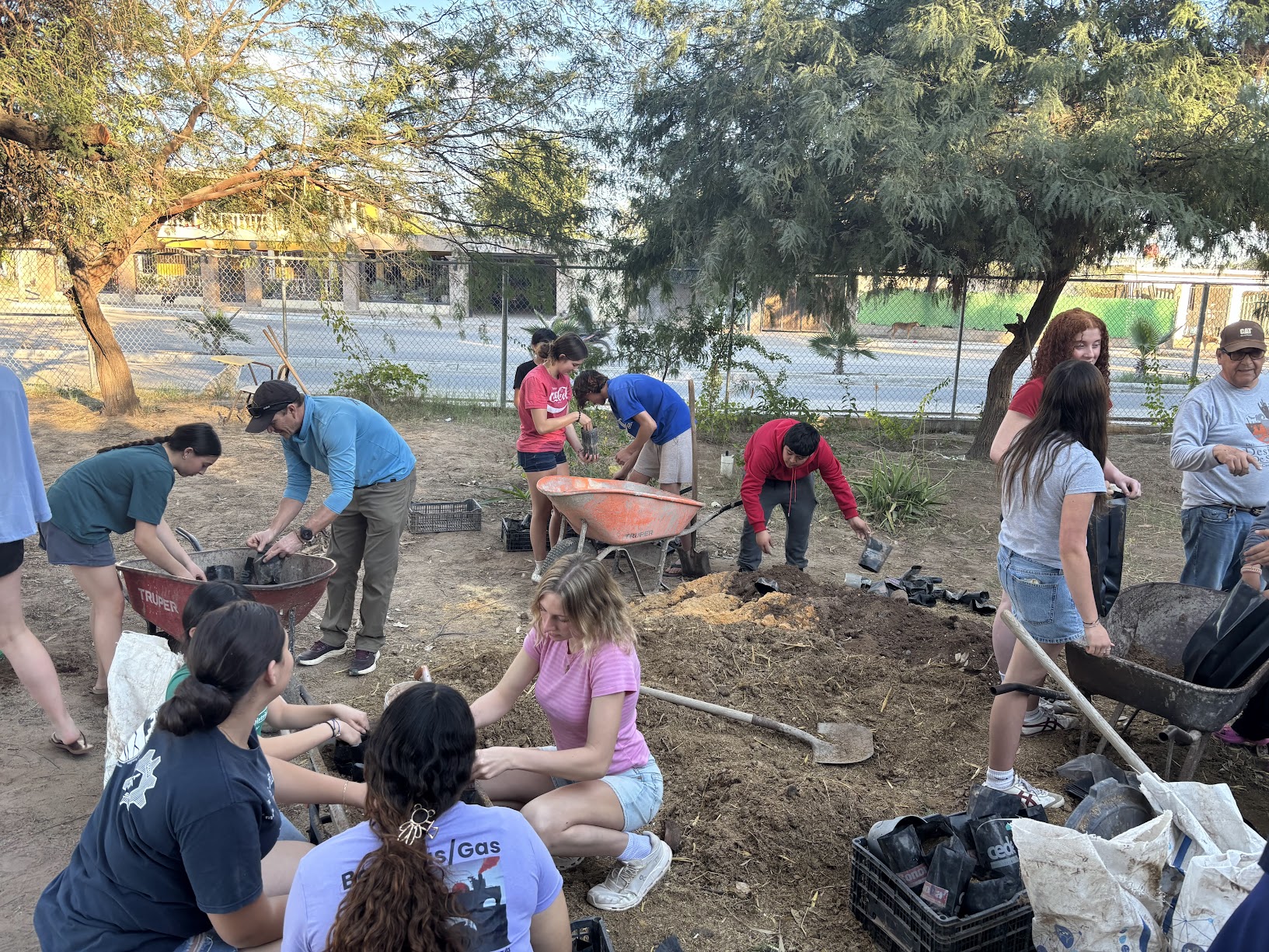
EXPERIENTIAL EDUCATION
Treehouse Learning Community
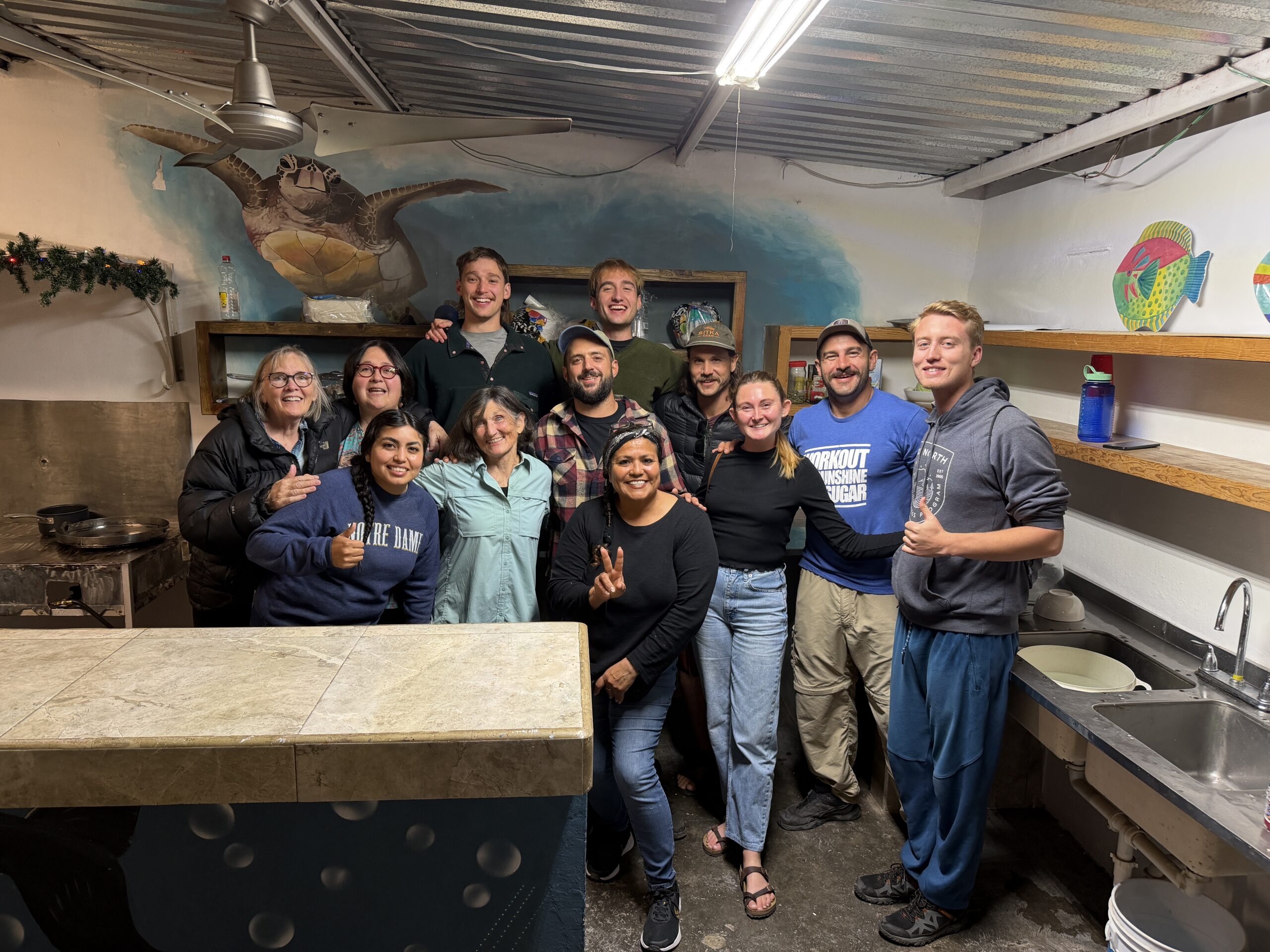
Members of Treehouse alongside Center staff and Monica and Maribel Becerra
Andy Galindo/Kino Bay Center
The year began with a visit from the Prescott, Arizona based Treehouse Learning Community, a sober collegiate living and learning organization. Treehouse groups have been visiting us for years to learn, share, and enrich their addiction recovery journeys through intercultural and landscape exploration.
Highlights this year included island exploration, a moving discussion surrounding addiction and resilience with Comcaac elders, and an extremely fun cooking class making fresh fish tacos at Monica’s house. We’re always looking forward to hosting Molly and the Treehouse crew, and the laughs, curiosity and connection they always share.
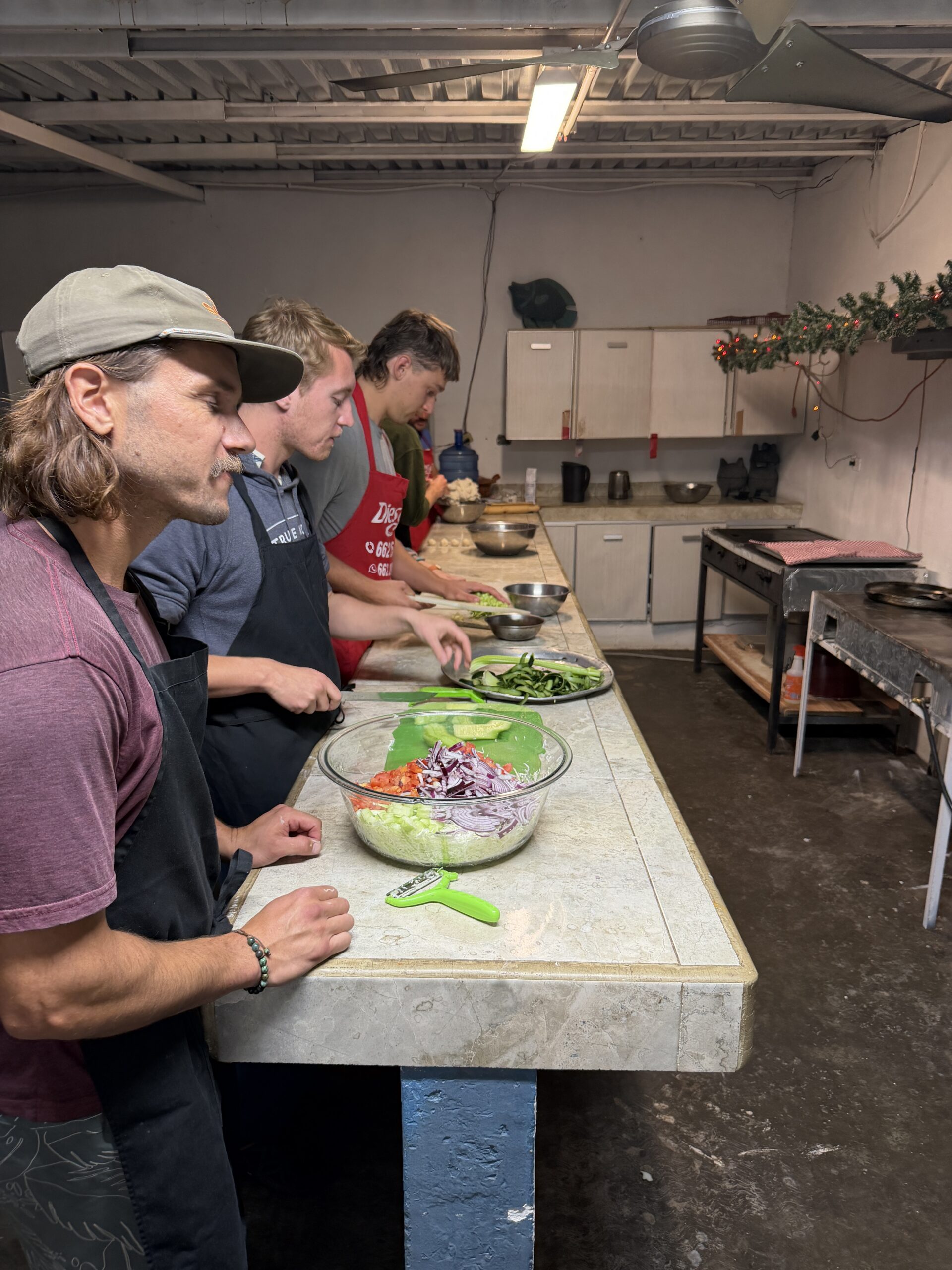
Members of Treehouse preparing fish tacos
Andy Galindo/Kino Bay Center
PC Spanish Intensive
The Spanish Intensive and Cultural Immersion class was back in Kino this January by “popular student demand.” Students were wrapped in Kino’s strong sense of community! Ten students participated in Spanish classes and shared daily life with families – and the joy and cultural exchange were palpable! Here is a window into their experience through their words . . . .
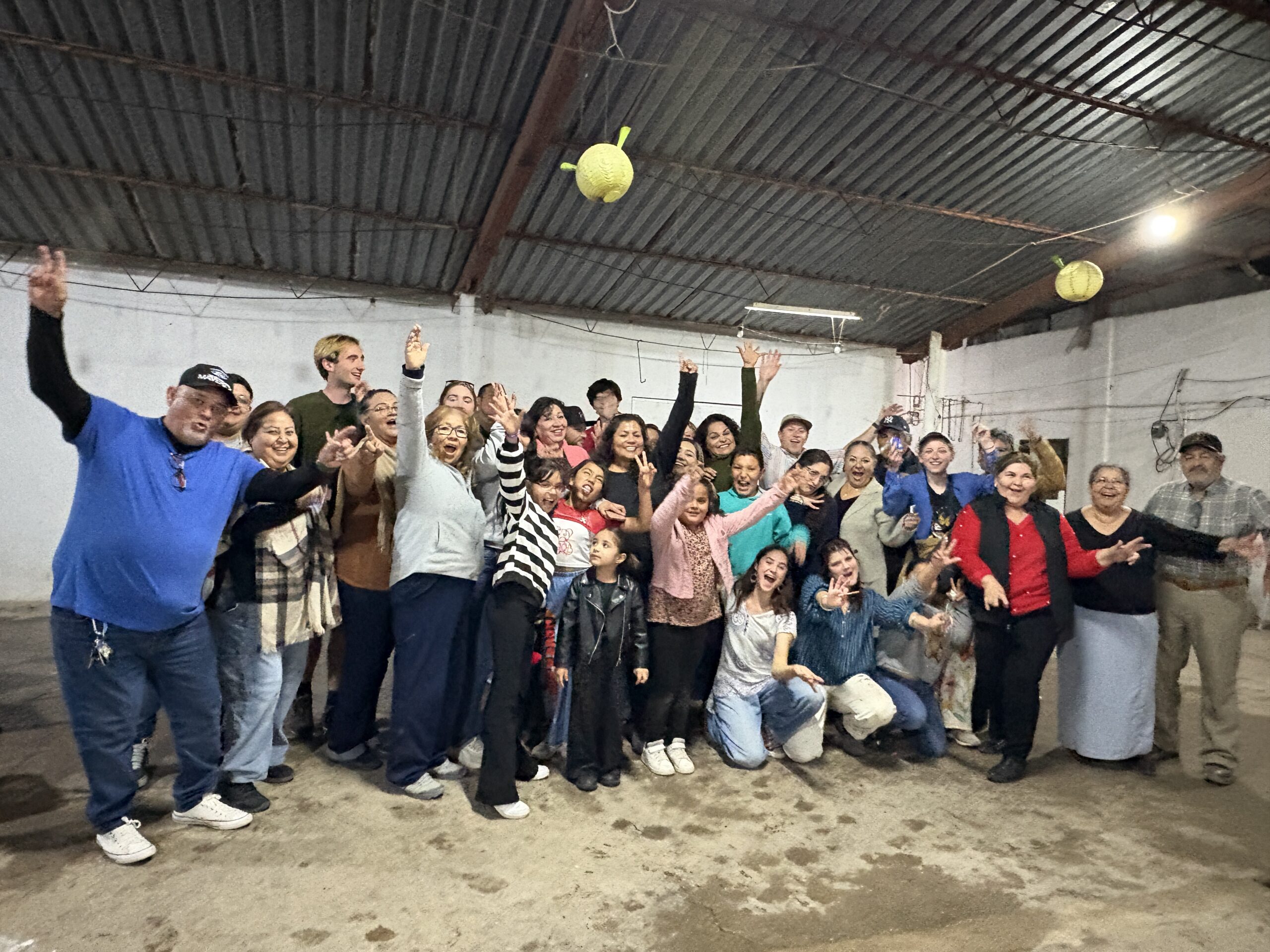
PC Spanish Intensive students with their host families
Kino Bay Center
CRMS Spanish Intensive
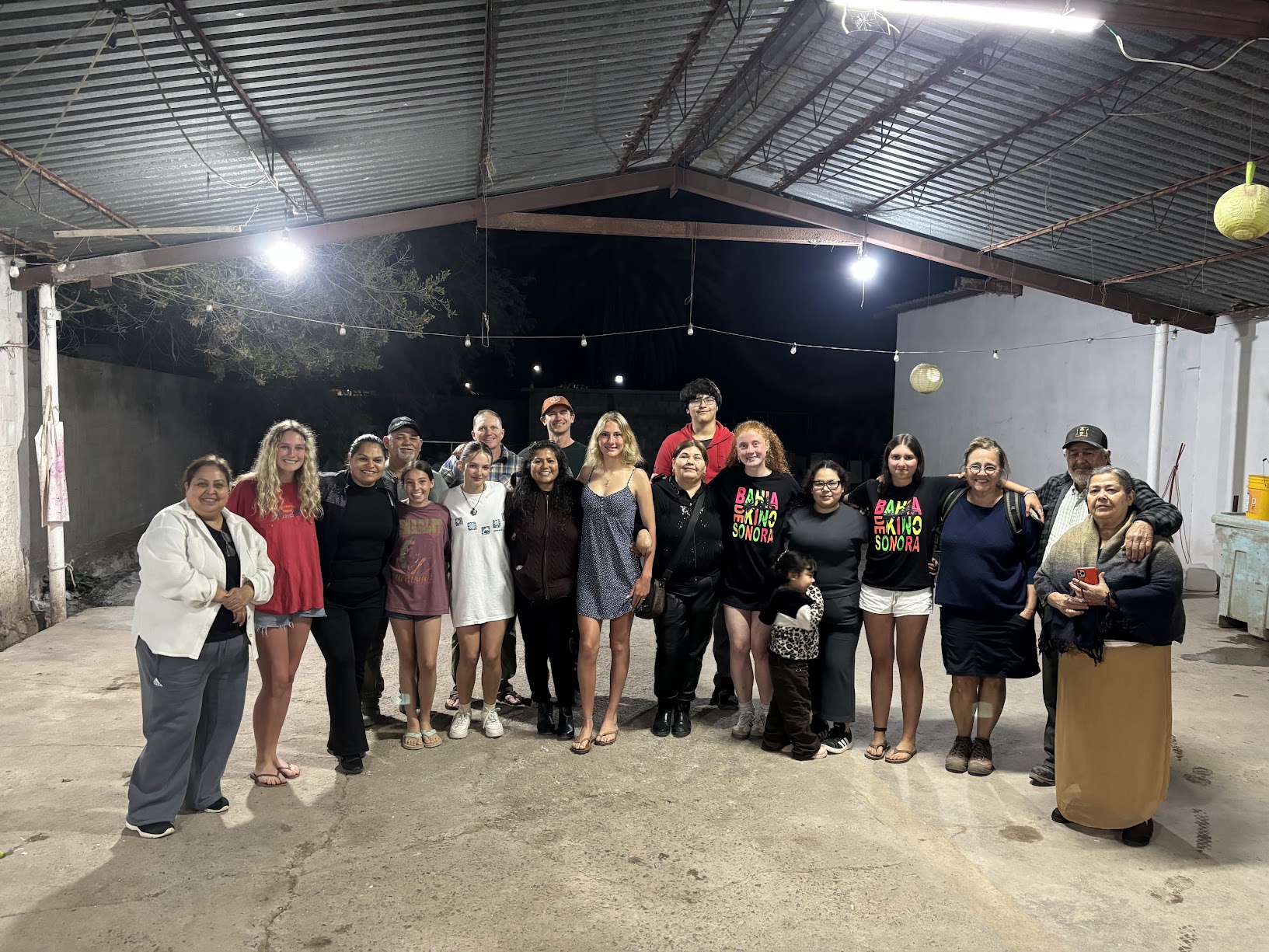
CRMS Spanish Intensive Students with their host families
Kino Bay Center
This February, the Center welcomed students from Colorado Rocky Mountain School for their first ever 9-day Spanish intensive and cultural immersion program rooted in relationship, reciprocity, and daily life in Bahía de Kino. Students lived with local host families, and these connections quickly became the heart of the program. Sharing meals, conversations, and everyday routines allowed students to practice Spanish in real situations while learning directly from the people who call Kino home.
The experience was meaningful not only for the students but also for our host families. Families who have been working in collaboration with the center for upwards of 15 years, opened their homes, shared traditions, and spent time introducing students to local foods, stories, and community spaces. Students brought curiosity, energy, and a willingness to step into a new culture, creating a truly cross-cultural exchange that extended beyond the classroom.
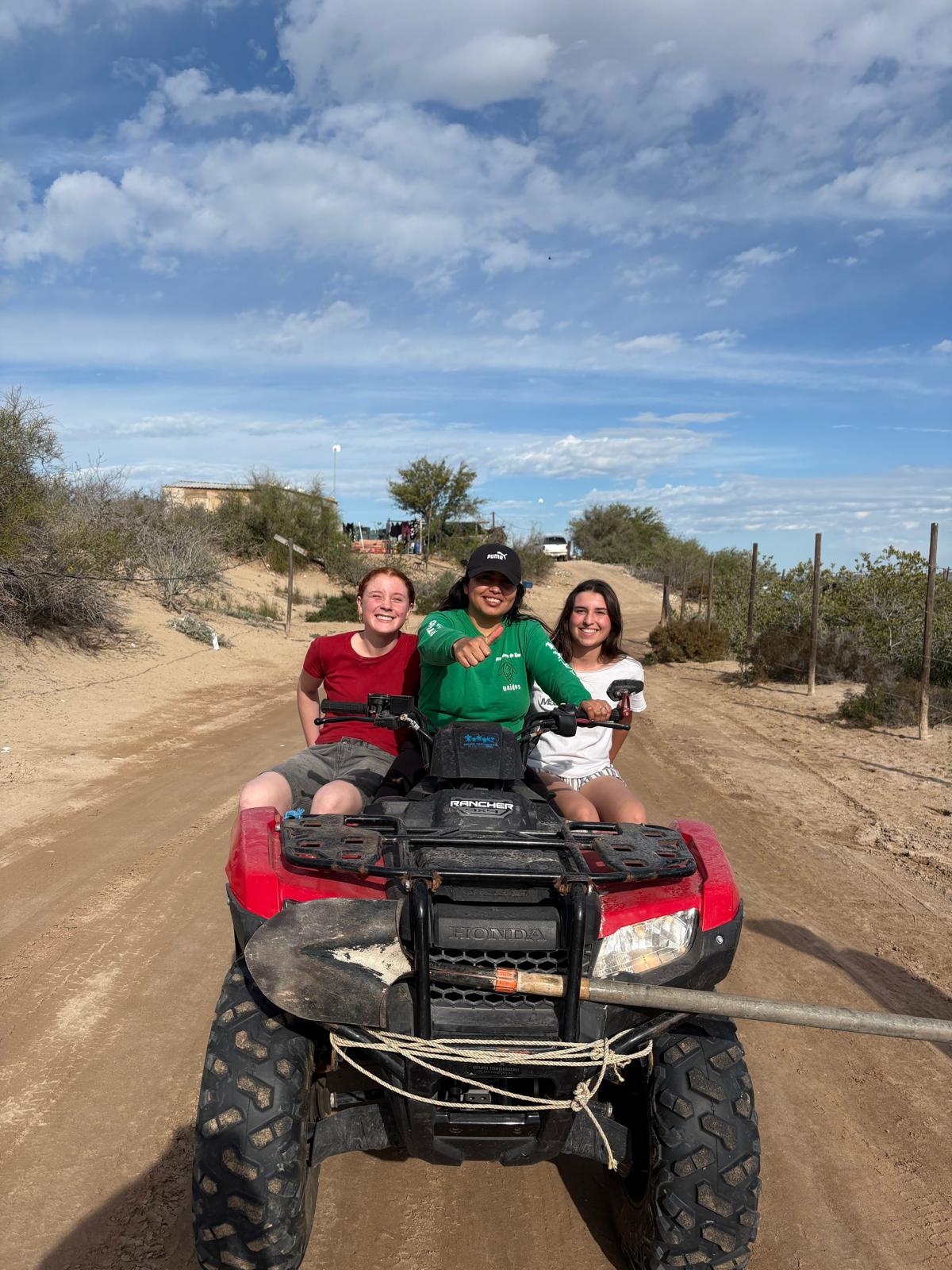
CRMS students riding a quad with Maribel Becerra during a beach clean-up
Kino Bay Center
Throughout the week, students participated in cooking classes, folkloric dance, time with the local secondary school ecology club, Jóvenes Delfines, a day with Comcaac educators, and a boat trip exploring the coast. These shared experiences strengthened relationships among students, families, and community members, showing that language immersion is most powerful when grounded in real human connection.
CRMS Biocultural Explorations
This February, the Kino Bay Center welcomed Colorado Rocky Mountain School for a nine-day Biocultural Explorations program grounded in field-based learning, community connection, and a deepening sense of place in the Midriff Islands region of the Gulf of California. With ten students and two instructors, the group arrived ready to engage fully with the landscapes and people of Bahía de Kino, embracing the rhythm of life at the station from the first shared meal to the final evening circle.
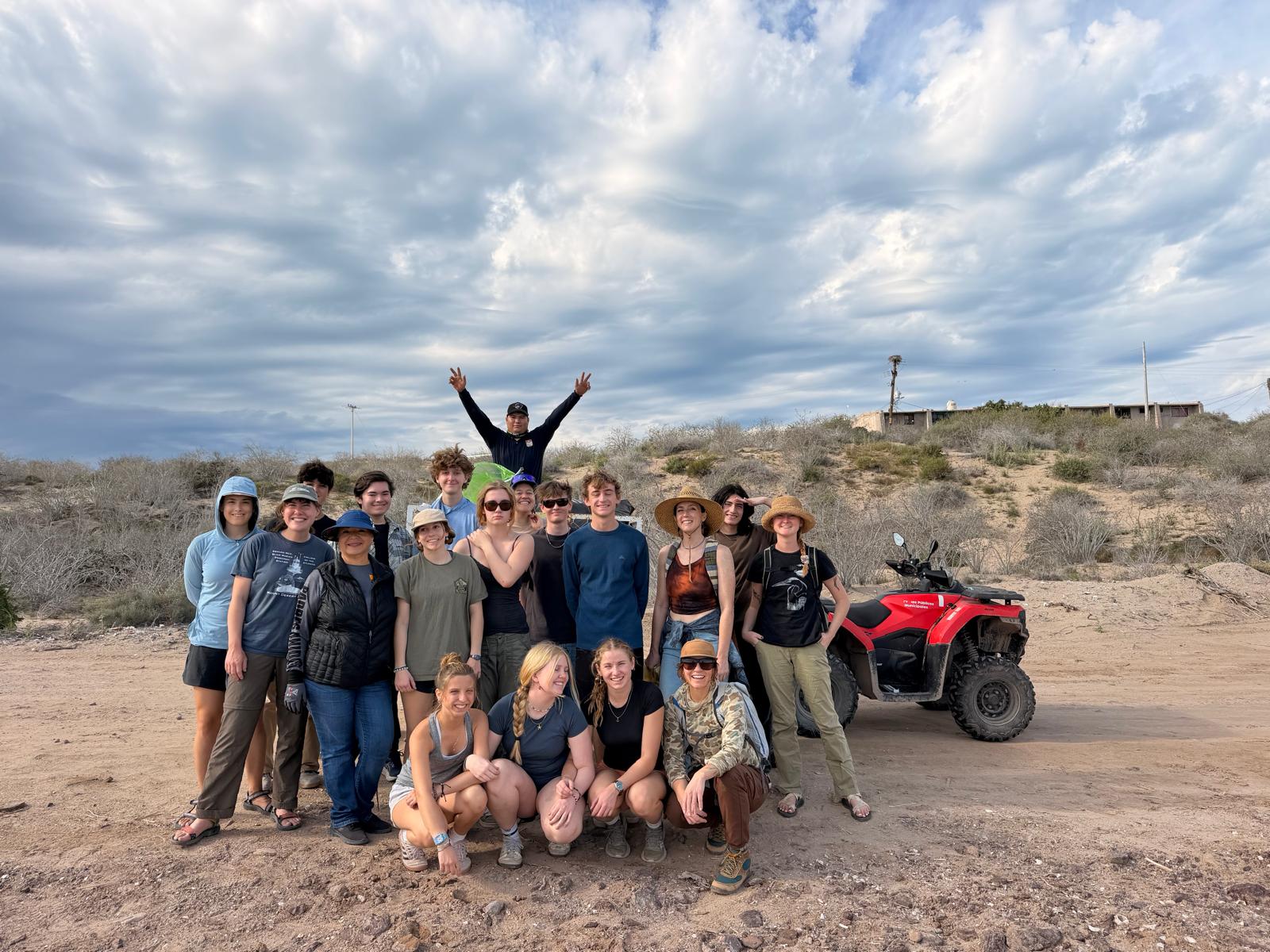
CRMS students in Estuary Laguna la Cruz
Kino Bay Center
Throughout the week, learning unfolded through direct experience. Students explored estuaries, mangrove systems, and desert landscapes, spent long days on the water observing whales, seabirds, and island ecology, and studied intertidal life through hands-on surveys and creative learning activities. Conversations with local fishermen and station staff also opened discussion about the realities of small-scale shrimp fisheries in the region, helping students understand the balance between livelihood, conservation, and the changing conditions of the Gulf. These moments grounded ecological concepts in the lived experiences of the people who depend on these waters.
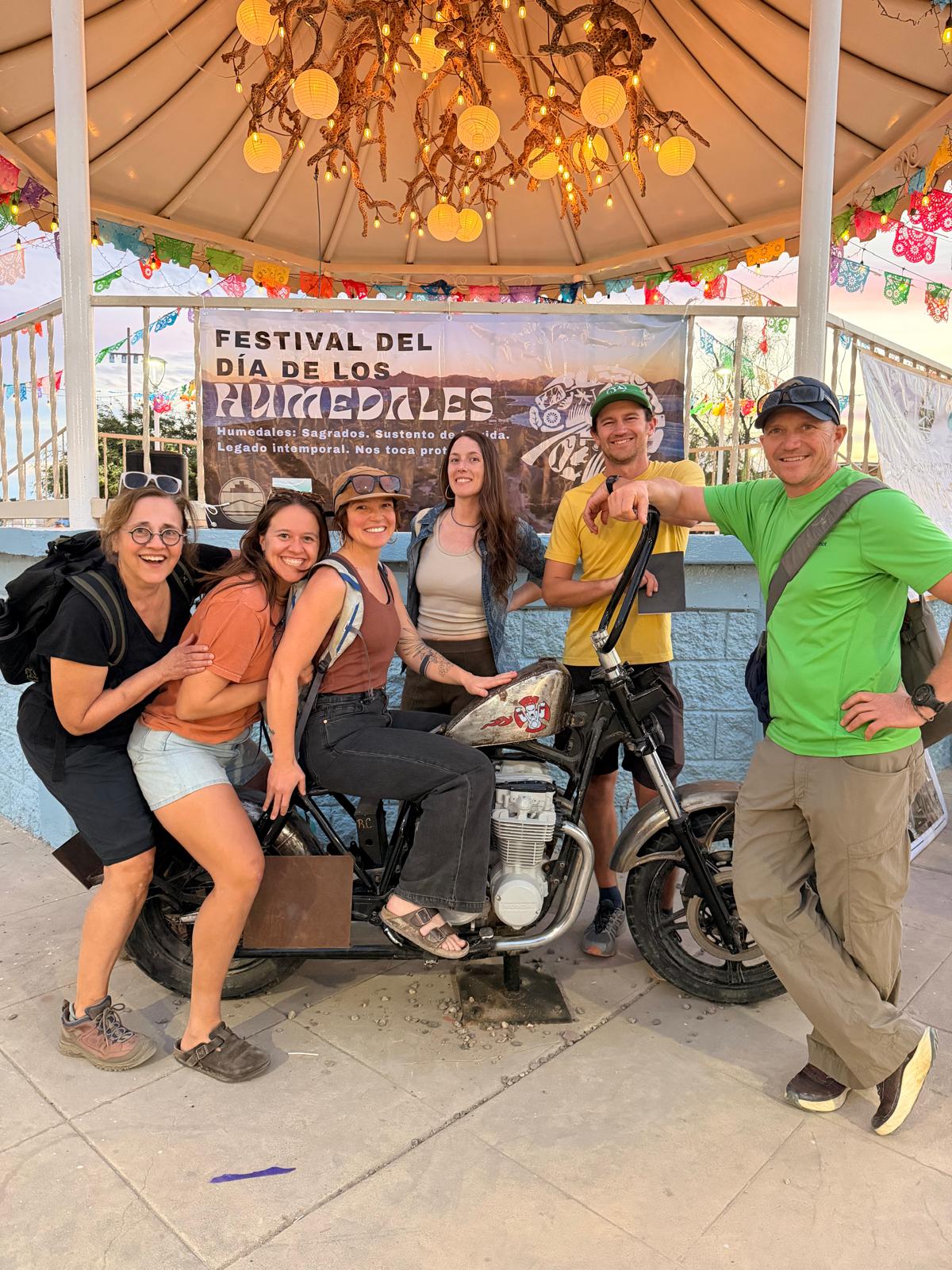
CRMS students and instructors at Kino's Wetlands Day Festival
Kino Bay Center
Equally important were the relationships formed beyond the classroom. Time with Comcaac educators and elders offered insight into traditional ecological knowledge and the long human history of this region. Participation in community events in Kino Viejo, conversations with local youth, and collaboration with conservation groups supported students to see the Gulf not only as a place of study but also as a living community.
By the end of the program, the group had built not only a species list, but a deeper understanding of how ecological learning grows through relationship, responsibility, and shared experience.
Prescott College Ph.D Students Immerse Themselves in Community, Conservation
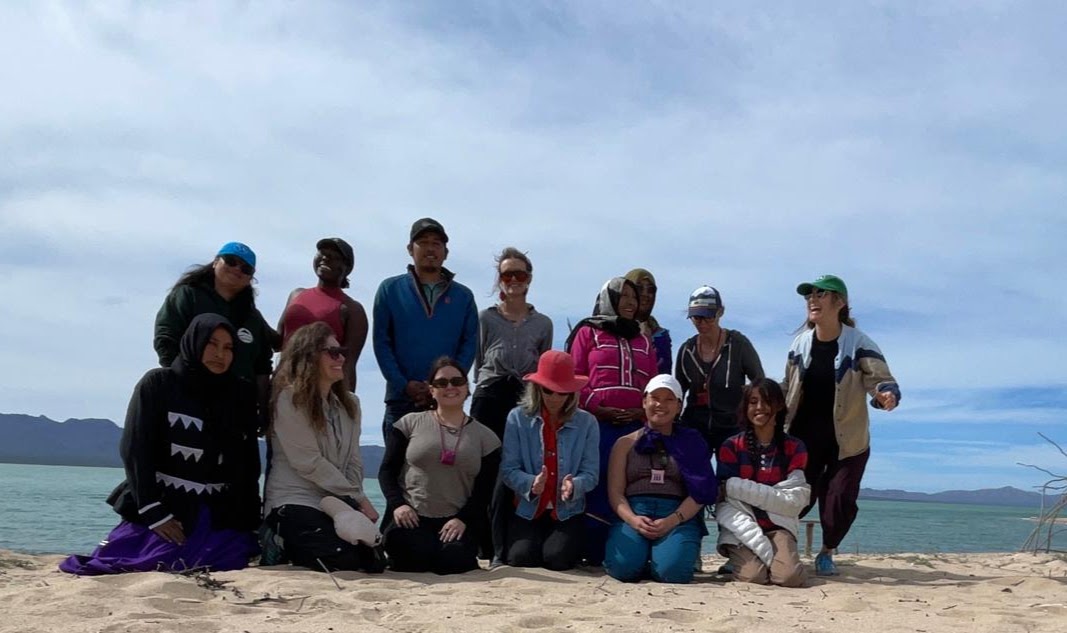
PC Ph.D students with Comcaac community members in Punta Chueca
Kino Bay Center
Ten students, alumni, and faculty from Prescott College gathered Feb. 14–20 in Bahía de Kino for the annual PhD retreat in sustainability education at the Kino Bay Center for Cultural and Ecological Studies.
Led by Kino Bay Center Director Lorayne Meltzer, Associate Dean of Doctoral Programs Emily Affolter, and core Ph.D. faculty member Sarah Fox, the retreat offered an immersive week of community learning, conservation work, and cultural exchange. Students connected directly with the land, sea, and communities that shape the region’s ecological and cultural heritage.
The gathering brought mostly online learners together for hands-on experiences exploring community-based conservation, Indigenous knowledge, and local culture. The week began with introductions, shared meals, and conversations about environmental education, climate justice, and community partnerships, strengthening the relationships that support their virtual learning.
Participants also joined residents in the local Carnival parade, where alumna Dr. Elisa Bocanegra and colleague Peren Yesilyurt of HERO Theatre animated a life-size humpback whale puppet, egret costumes, and seagull puppets. Local youth created colorful fish puppets for a collaborative float blending art, storytelling, and environmental themes.
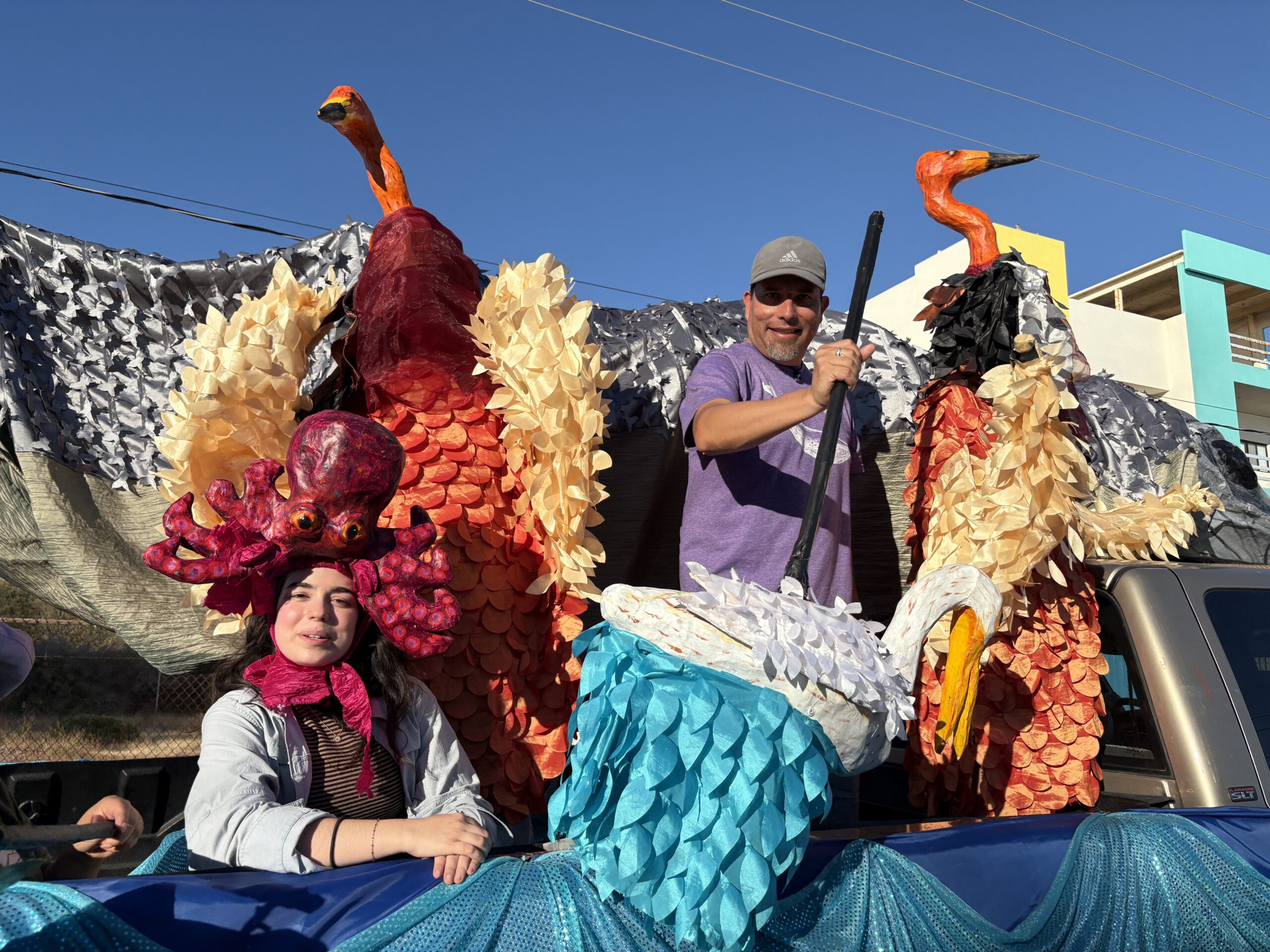
The Center's float taking part in the Carnival parade
Kino Bay Center
Field trips formed the backbone of the retreat. Students traveled with Captain Cosme Becerra to Isla Alcatraz, observing seabirds, turtles, and sea lions while learning about locally led conservation programs. On a second day at sea near Isla Tiburón, bottlenose dolphins surfaced alongside the boat.
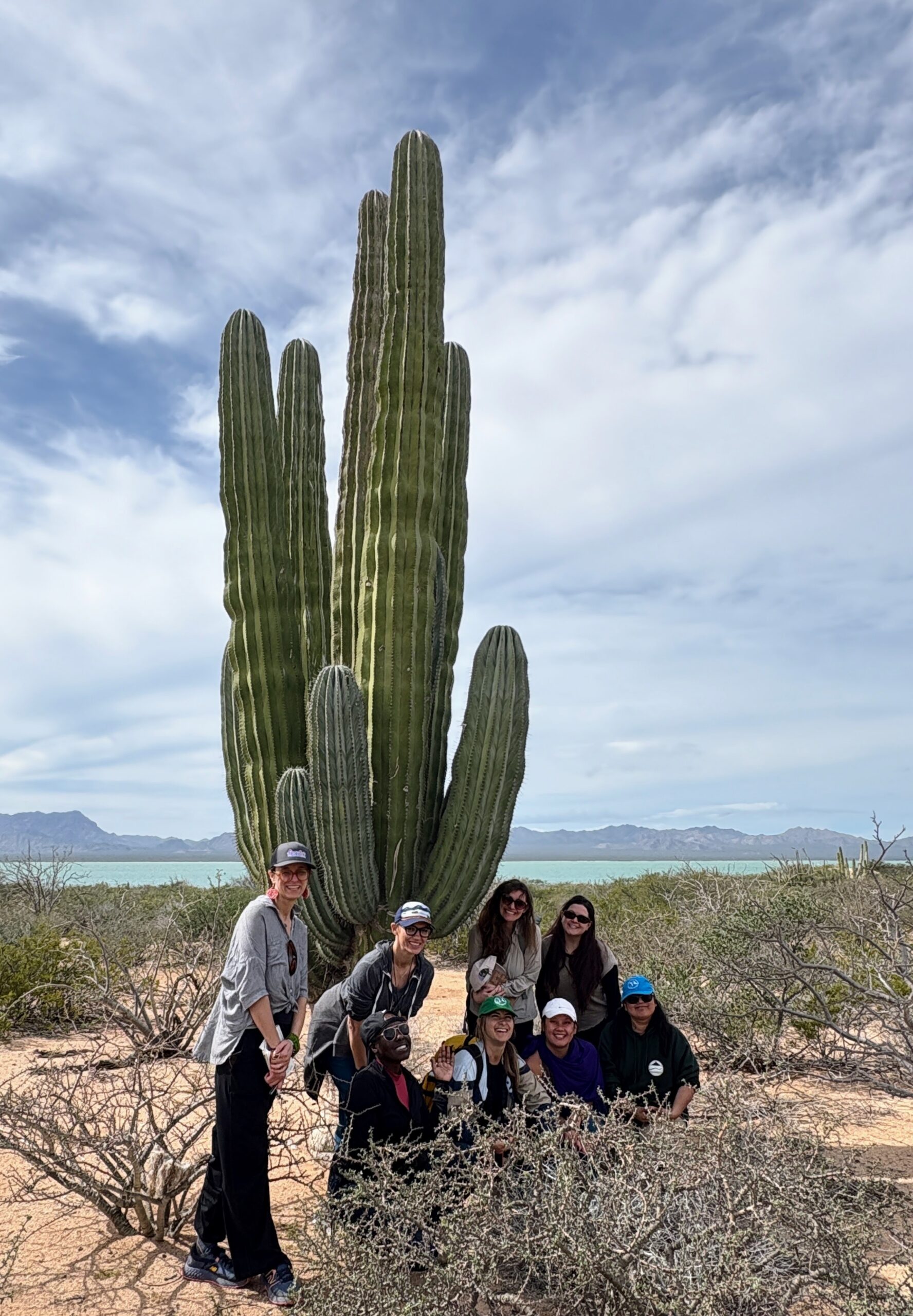
PhD students in front of a cardon in Comcaac territory
Kino Bay Center
Another day focused on traditional ecological knowledge from the Comcaac community, including basket weaving, medicinal plants, and teachings about gratitude and reciprocity with the land.
“Working with the Comcaac community activates something in all of us that, for many—especially those with settler lineages—has been lost in different ways… the roots that all of us share,“ said Emily Affolter.
Between excursions, students prepared meals, walked the beach, and reflected on their research—experiencing sustainability education in action while building lasting community and connection to place.