

New Article Collaboration
Killer whales (Orcinus orca) predation on mysticetes in the Gulf of California, Mexico
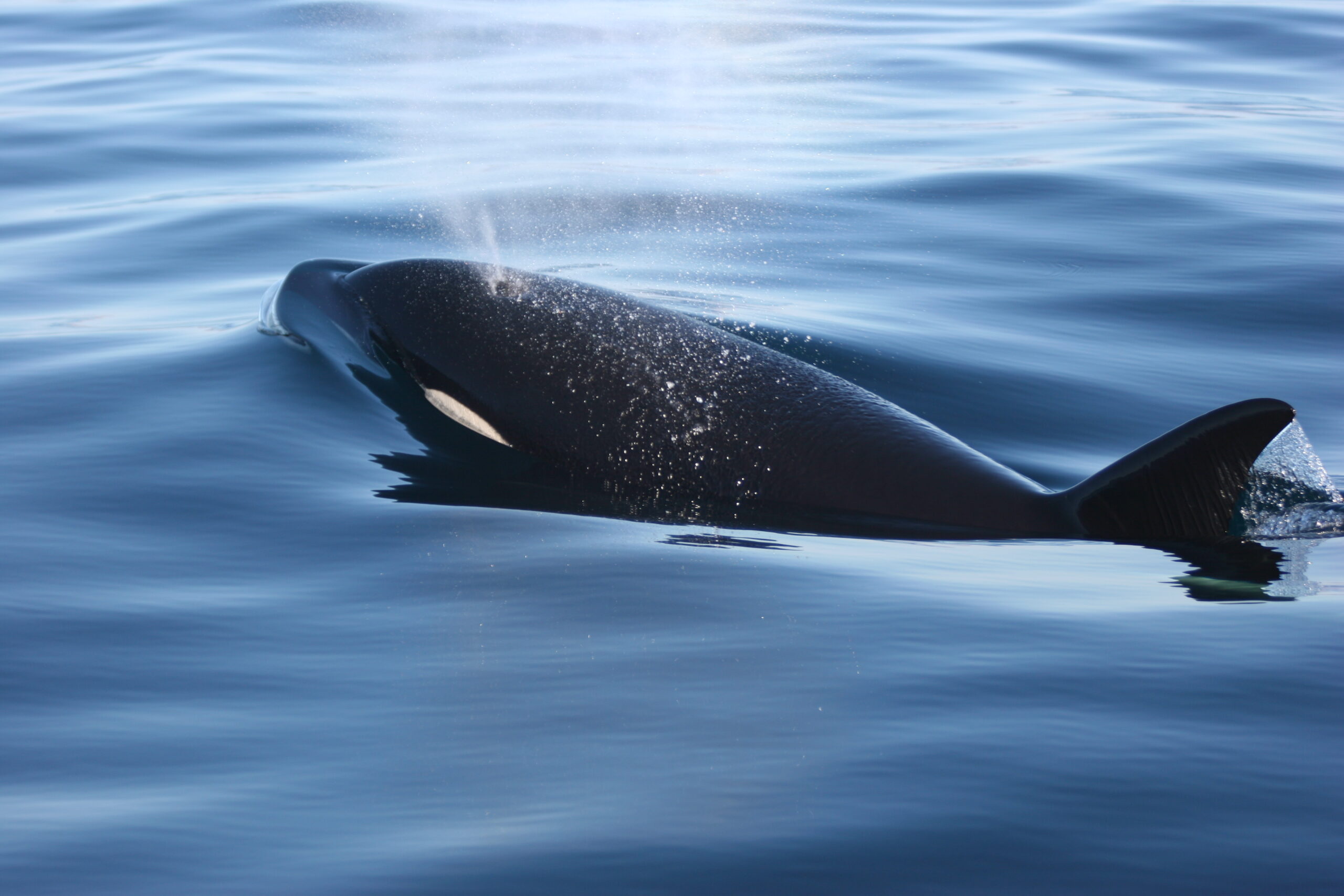
Killer whale in the Gulf of California
Kino Bay Center
Héctor Pérez, Marine Mammal Program Coordinator, played a key role in an article recently published in The Latin American Journal of Aquatic Mammals, “Killer whales (Orcinus orca) predation on mysticetes in the Gulf of California, Mexico.” The study documents seven cases of fin, Bryde’s, and gray whales preyed upon by killer whales along the continental coast of Sonora over a 17-year period.
These events were identified through direct inspection of stranded or floating carcasses, analysis of characteristic predation marks, and videos provided by local fishermen. The consistent pattern of killer whales selectively removing large portions of skin and blubber and consuming only the tongue provided new insight into their feeding behavior in shallow, productive coastal waters.
Héctor’s 15 years of continuous monitoring in the Midriff Islands Region were fundamental for contextualizing these observations within broader cetacean dynamics. The Center’s long-term datasets, built through systematic fieldwork and community collaboration, offer critical baselines for understanding when, where, and how these interactions occur.
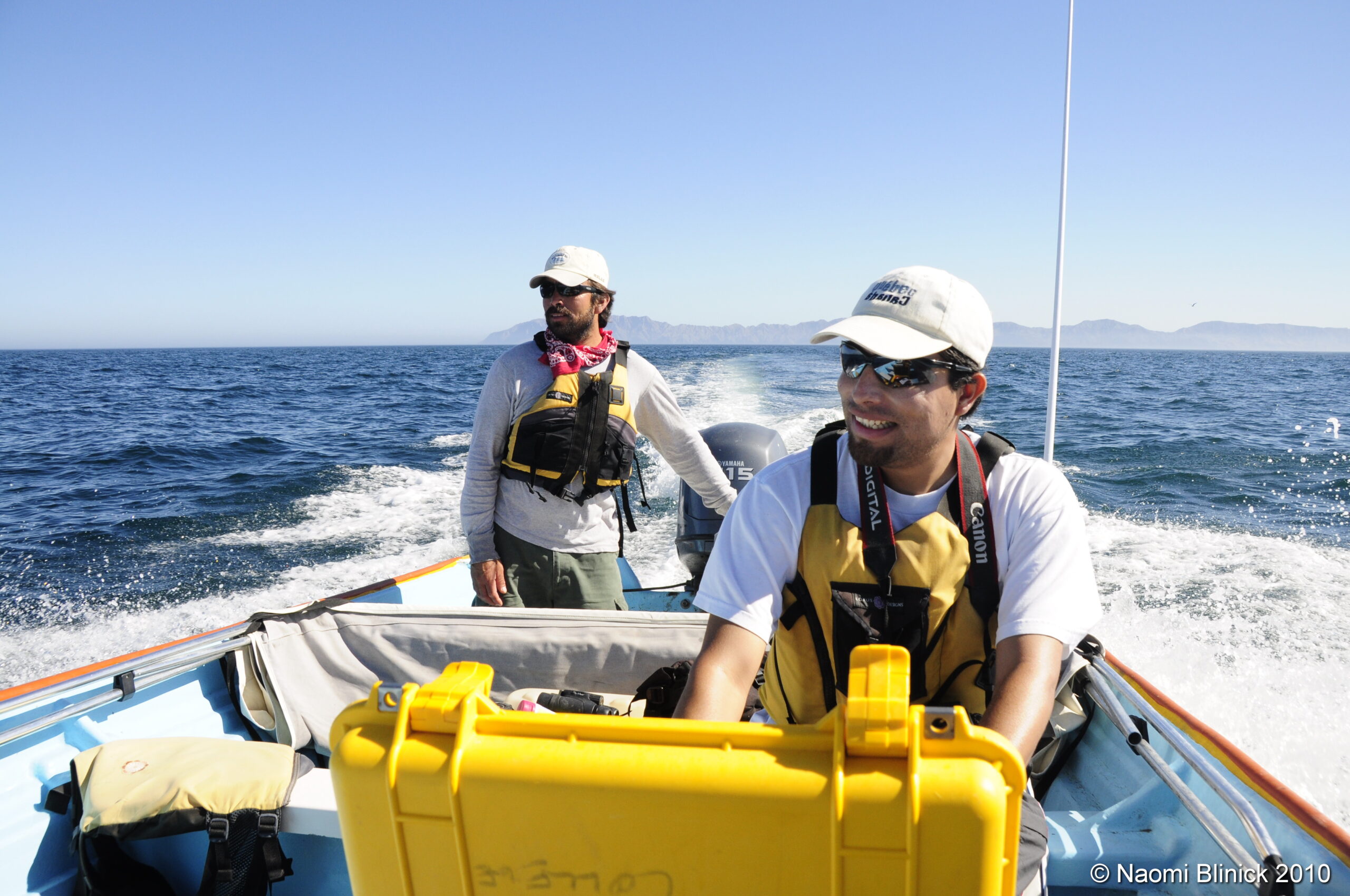
Héctor on a monitoring session in 2010
Naomi Blinick/Kino Bay Center
This publication highlights not only the scientific value of his contributions but also the importance of regional collaborations for strengthening the Center’s conservation work. By integrating data, expertise, and local knowledge, these partnerships help piece together the complex ecological puzzle of orca behavior in the Gulf of California, advancing research and conservation efforts.
Double Crested Cormorant Nesting Season on Isla Alcatraz
As is now a long-standing tradition on Isla Alcatraz, the Double-crested Cormorant (Nannopterum auritum) was the first nesting visitor of the season. Every year, thousands of cormorants arrive on Alcatraz, driven by one of the most ancient of biological needs—reproduction. This small island provides excellent habitat for this and up to 13 other species during their breeding seasons. Shelter, access to food, and a predator-free zone are just some of the advantages of nesting on this safe-haven island.
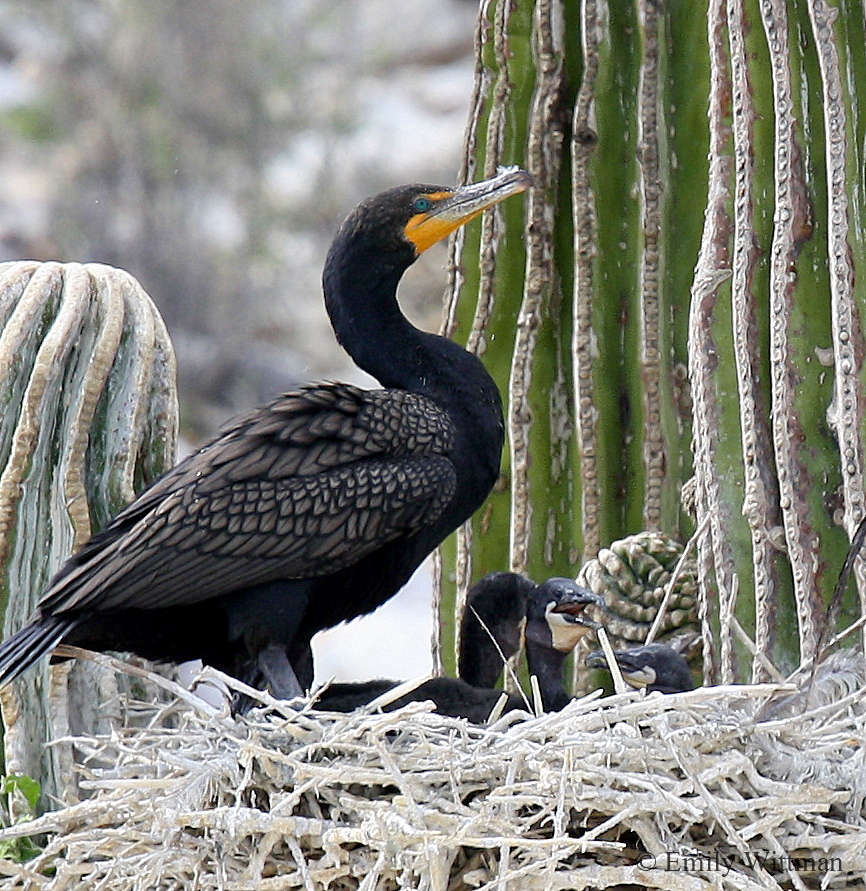
Double crested cormorant nesting on Isla Alcatraz
Emily Wittman/Kino Bay Center
Productivity every year is different; some years are successful, others less so. Each year has its own complex dynamic and unique story. This season has just begun, so we are very excited to witness this year’s story unfold. Studying nesting birds tells us a great deal about the health of both the species itself and the regional ecosystem.
For this reason, we will be visiting the island’s nesting cormorant colonies, trying to uncover their secrets, understand their challenges, their successes, and, above all, what we can do to conserve this first nesting visitor to this very special island.
Geodiversity Thesis Completed by Long-time Center Collaborator, Jorge Miros
Congratulations to Jorge Miros for completing his doctoral thesis entitled “Geodiversity of the Central Portion of the Gulf of California, Between Tiburón Island and Bahía de Kino, Sonora: A Conservation and Management Proposal for Natural and Cultural Heritage.”
Jorge visited in October to begin a series of activities to share the results of his research with community members in hopes of seeking future recognition of sites within the Canal del Infiernillo as part of the new IUCN “Key Geoheritage Areas” category.
Jorge’s relationship with the Center and local communities began in 2013, when
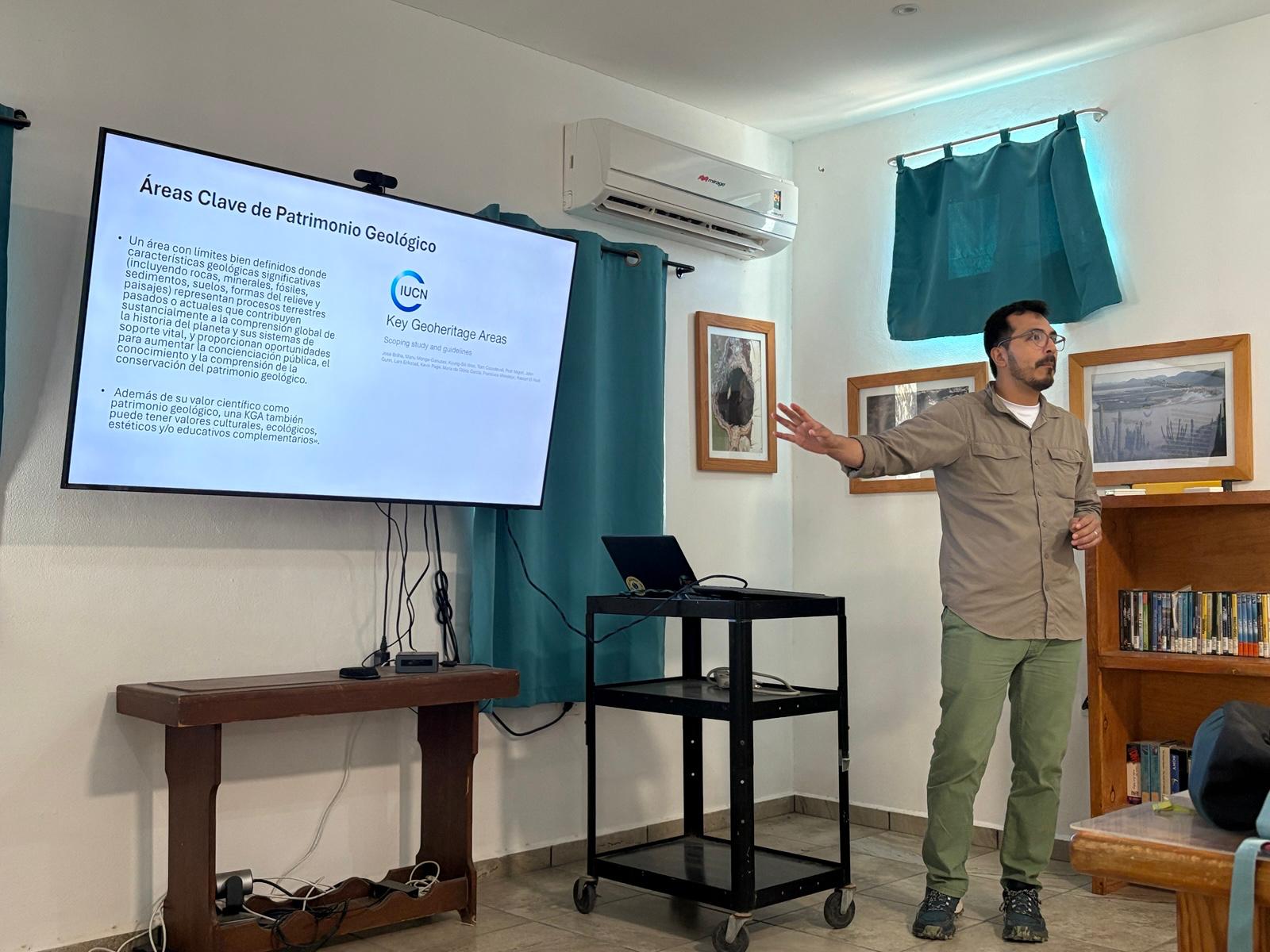
Jorge presenting his thesis to Center staff members
Lorayne Meltzer/Kino Bay Center
he worked for two years within the Environmental Education Program. He returned to coordinate the Wetland Conservation Program from 2018–2020, and since then has visited to conduct research through his doctoral program at the Universidad Autónoma de México. Jorge’s research and resulting contributions to the region are strengthened by his depth of connection, experience, and context developed over time.