

Response to ecological impacts of sardine purse-seine fishing in the bay

Brown pelicans swarming a school of fish caught by a sarding fishing boat in the Gulf of California
Ulises Rancaño/Kino Bay Center
Sardine fishing boats threaten the Gulf of California’s ecological health for a myriad of reasons, primarily because they remove 1,000s of tons of sardines and other small pelagic species that are vital in sustaining marine food chains.
In an ironic turn, this season the sardine (small pelagics) fishery sought Marine Stewardship Council (MSC) recertification as a “sustainable fishery” during the same month that pelican mass mortality was documented in Kino Bay as a result of purse-seine sardine fishing.
While community environmental leaders from Bahía de Kino submitted written statements expressing their “extreme concern,” the Center provided a technical opinion based on long-term monitoring, demonstrating direct and indirect impacts of purse-seine operations on biodiversity.
Evidence included data, reports, photos, and videos compiled collaboratively by community members and Center staff. These findings alerted the MSC to the complex socio-ecological consequences of sardine fishing, including:
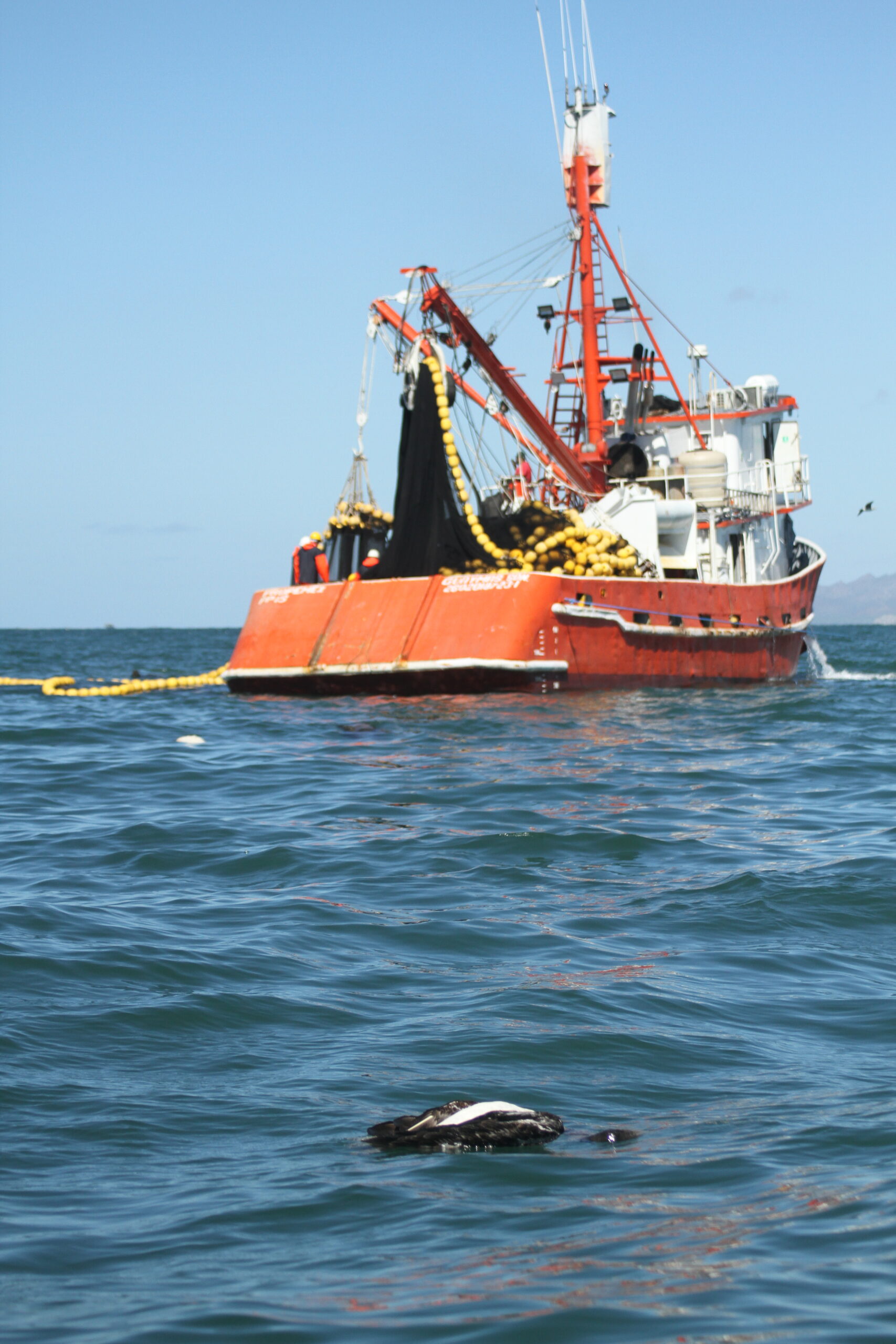
A brown pelican caught dead in the net of a sardine fishing boat
Ulises Rancaño/Kino Bay Center
Voces del Estero:
Voces del Estero is a collaborative project between the Center and community groups that form the conservation movement of Bahía de Kino.
Designed to strengthen local leadership, the initiative invited community leaders to participate in capacity-building workshops on storytelling and media production, led by Media and Communications Program Coordinator Ulises Rancaño in partnership with the Environmental Education Program.
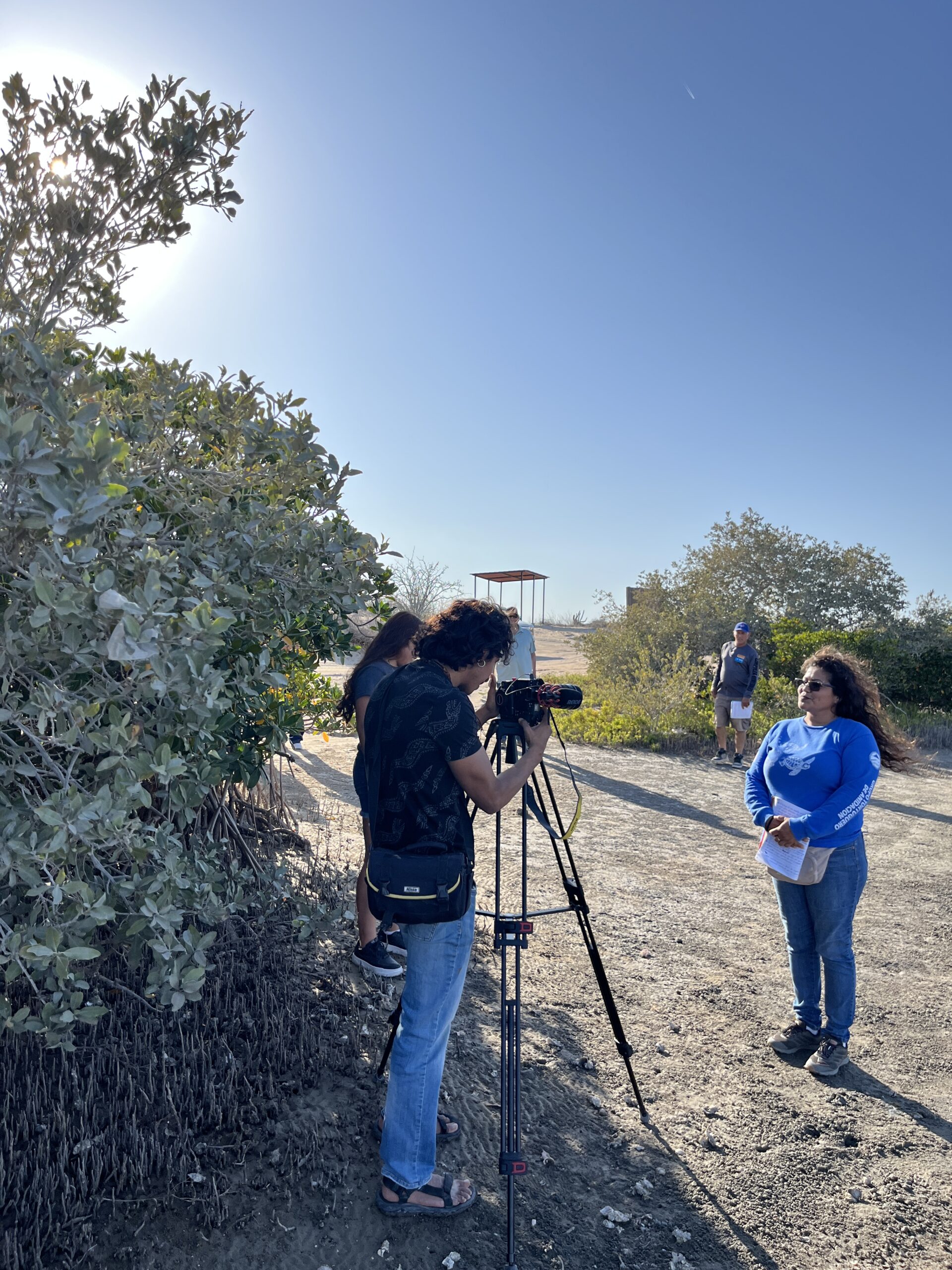
Ulises Rancaño filming community leader Monica Becerra in Laguna La Cruz
Andrés Galindo/Kino Bay Center
Through these workshops, participants created four short videos that narrate the story of the Laguna La Cruz estuary across four key themes:
The videos were shared as a mini-campaign on our social media platforms and will also be embedded in six posters comprising an interpretive trail in Laguna La Cruz. Voces del Estero highlights the importance of community voices in shaping local environmental stewardship and strengthening the region’s conservation narrative.
Click the videos embedded below to watch Voces del Estero in its entirety: