

Collaborative Community Projects Contributing to Coastal Conservation
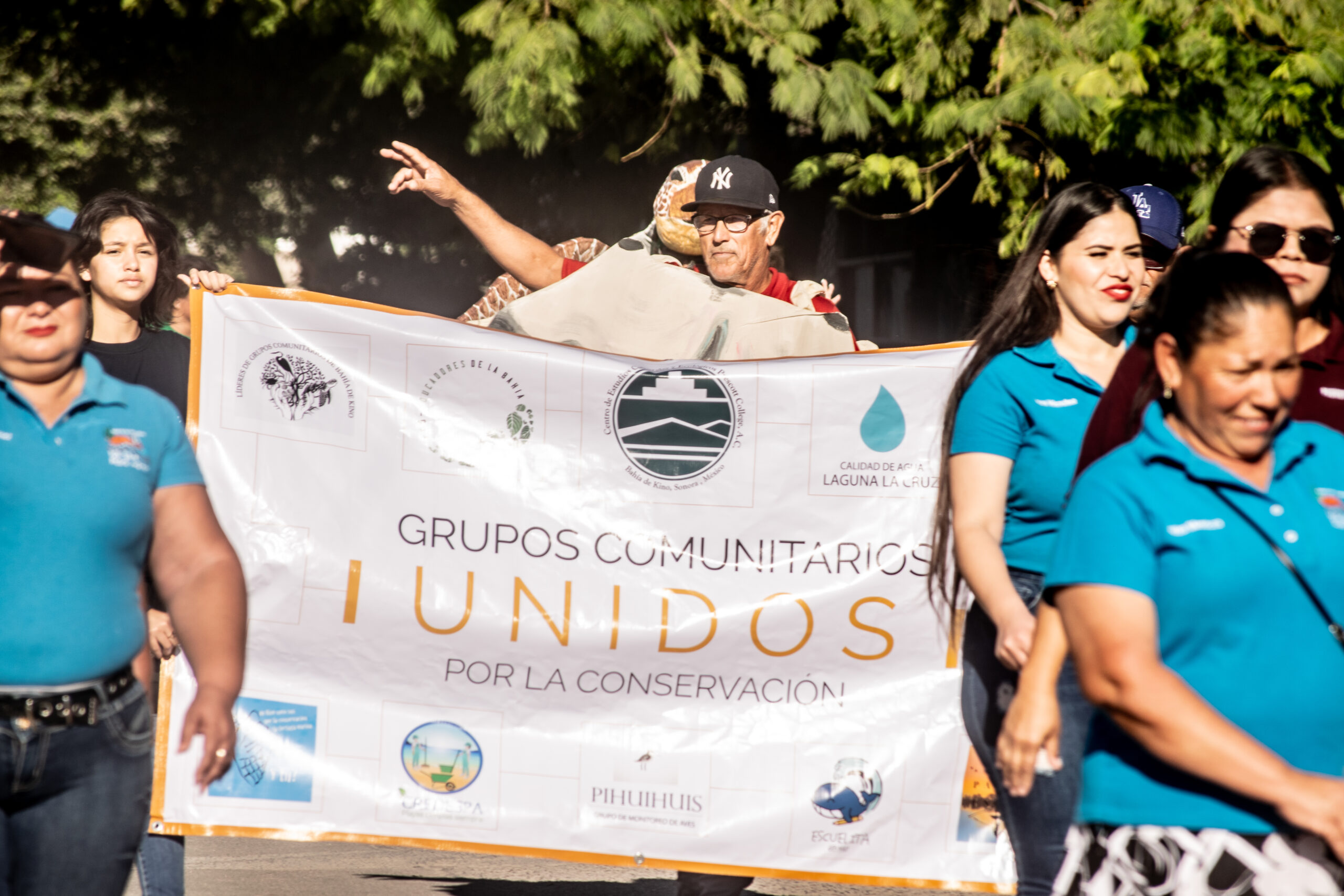
Community groups at a Revolution Day Parade in Bahía de Kino
Ulises Rancaño/Kino Bay Center
This fall, the Center worked with community partners to develop proposals and initiate activities on 12 collaborative community conservation projects. The focus of these projects is to contribute to the conservation of the Laguna La Cruz and Canal del Infiernillo Ramsar sites through education, restoration, monitoring, or capacity building. Community projects are collaborations between the Center and community members toward a common conservation goal.
Some highlights from this season so far include:

Eco-Educadores presenting at an Earth Day fair
Johana Nieblas/Kino Bay Center
ECO-EDUCADORES
(with Johana Nieblas of the Center’s Environmental Education Program)
Developing curriculum for seven environmental education classes to be taught in six 5th-grade classrooms.
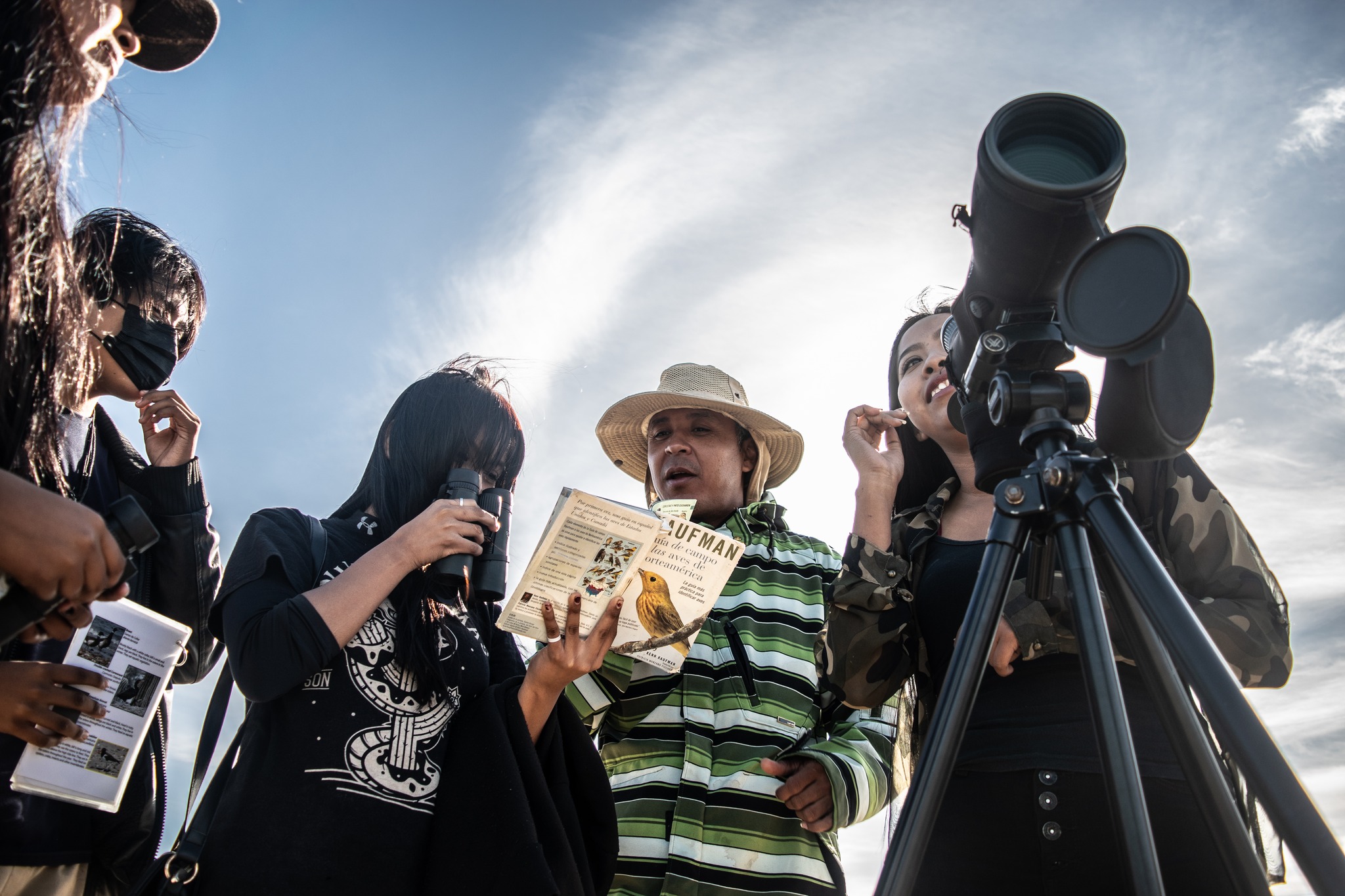
Jaime with Grupo Coijaac
Ulises Rancaño/Kino Bay Center
GRUPO COIJAAC
(with Jaime Martínez, Lauren Dolinski, and Aaron Barnett of the Center’s Waterbird Monitoring and Indigenous Community Partnership Programs)
Strengthening traditional ecological knowledge by including Ana María Morales as a mentor.
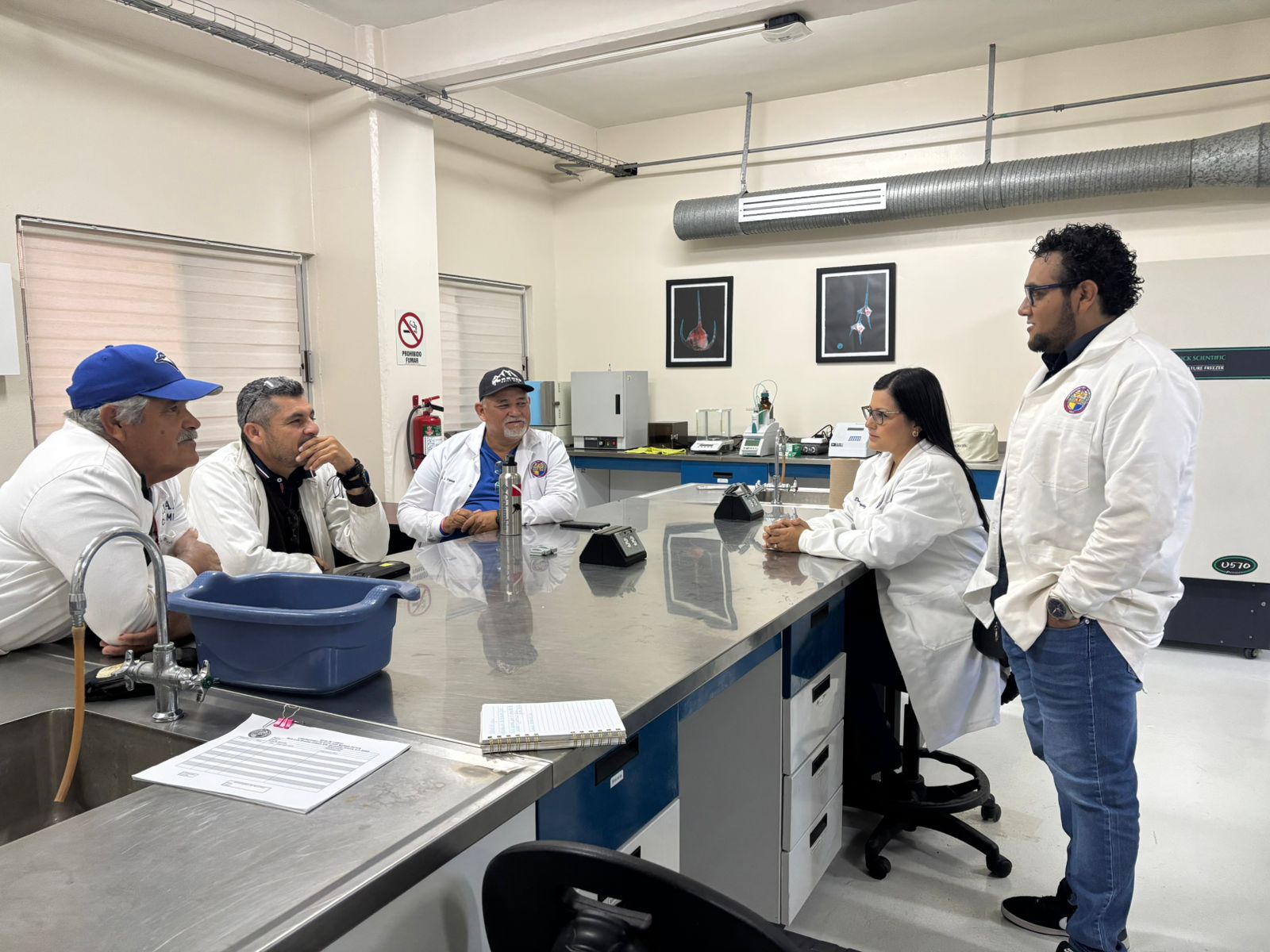
Calidad de Agua in an UNISON lab
Grisel Heredia/Kino Bay Center
CALIDAD DE AGUA
(with Ulises Becerra of the Center’s Wetland Conservation Program and Perla Urquidez and Erick Ponce of the University of Sonora)
Increasing technical capacity of community participants through workshops on sample analysis in UNISON labs.
Environmental Fair at the
Kino High School
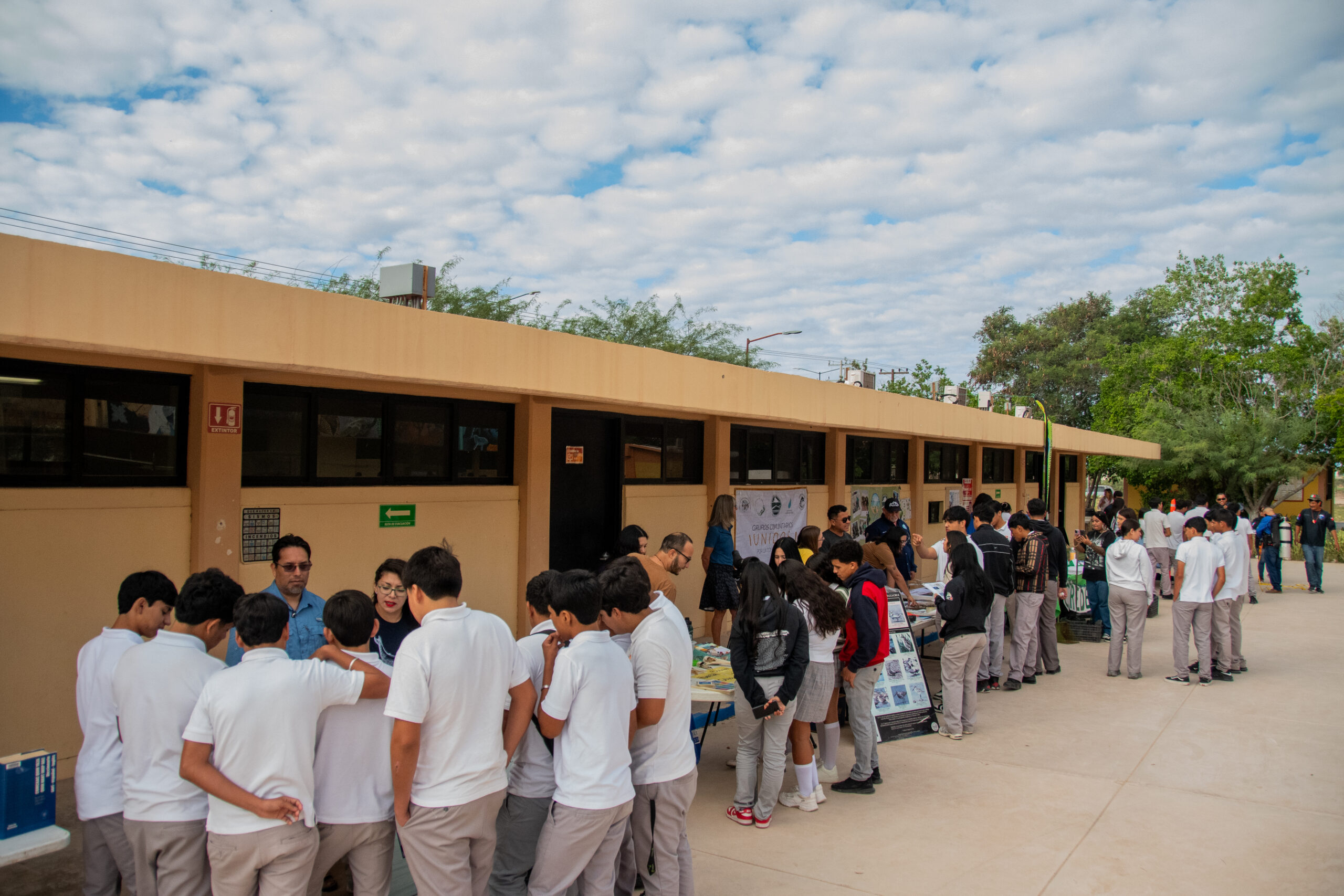
Students from Bahía de Kino's Nissan High School attending the Center's environmental fair
Andrés Galindo/Kino Bay Center
The Center collaborated to host an environmental fair at Kino’s COBACH high school as part of a larger outreach initiative focused on increasing the participation of Bahía de Kino’s high school students in the Center’s activities.
The Center’s science, education, communication, and conservation programs participated alongside community groups to educate students on topics such as marine biodiversity, clam repopulation in Laguna La Cruz, local effects of climate change, seabirds, Indigenous community collaborations, Laguna La Cruz conservation efforts, and sea turtle monitoring in the area. Community groups participating in the event included Mujeres del Mar de Cortés, Ecoeducadores, CREDSPA, and Grupo Tortuguero de Bahía de Kino.
During the event, the Center’s director, Lorayne Meltzer, presented high school student Yeira Datziry with a copy of last year’s annual report, which included a tribute to Yeira’s outstanding collaborative participation during the 2024–2025 season.
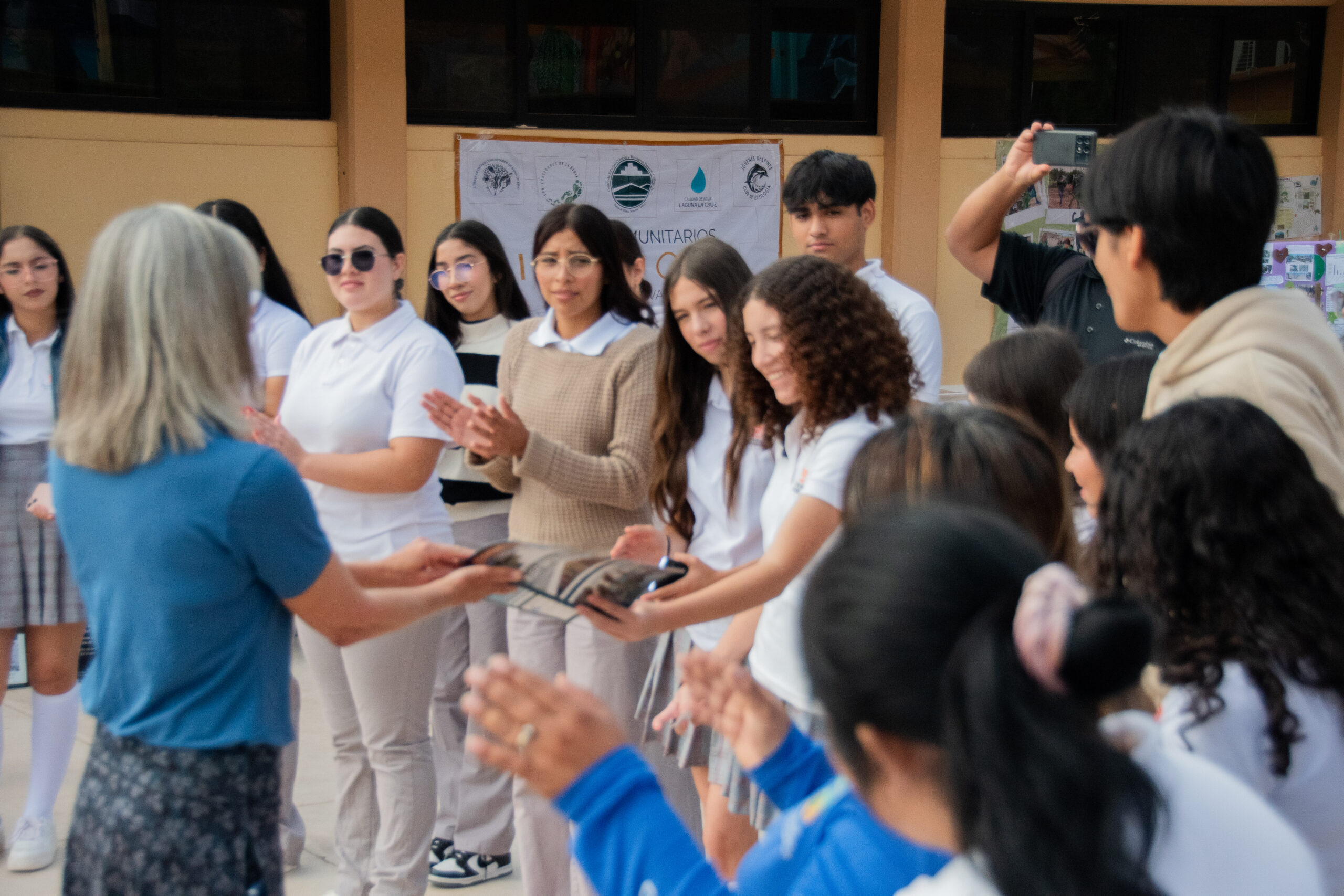
Lorayne presenting the Center's annual report to Yeira
Andrés Galindo/Kino Bay Center
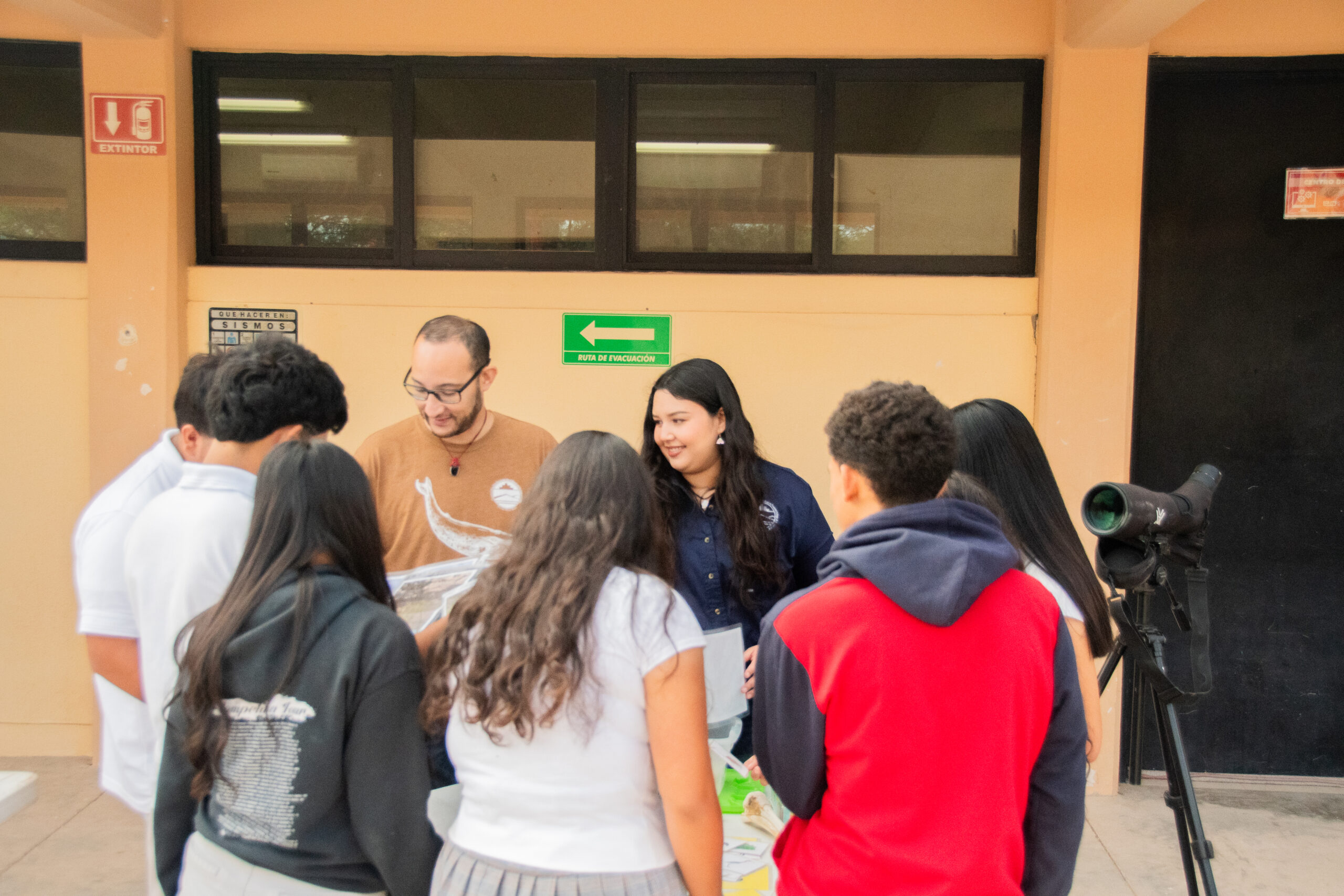
Environmental Education Coordinators Edgar Magdaleno and Johana Nieblas presenting at the fair
Andrés Galindo/Kino Bay Center
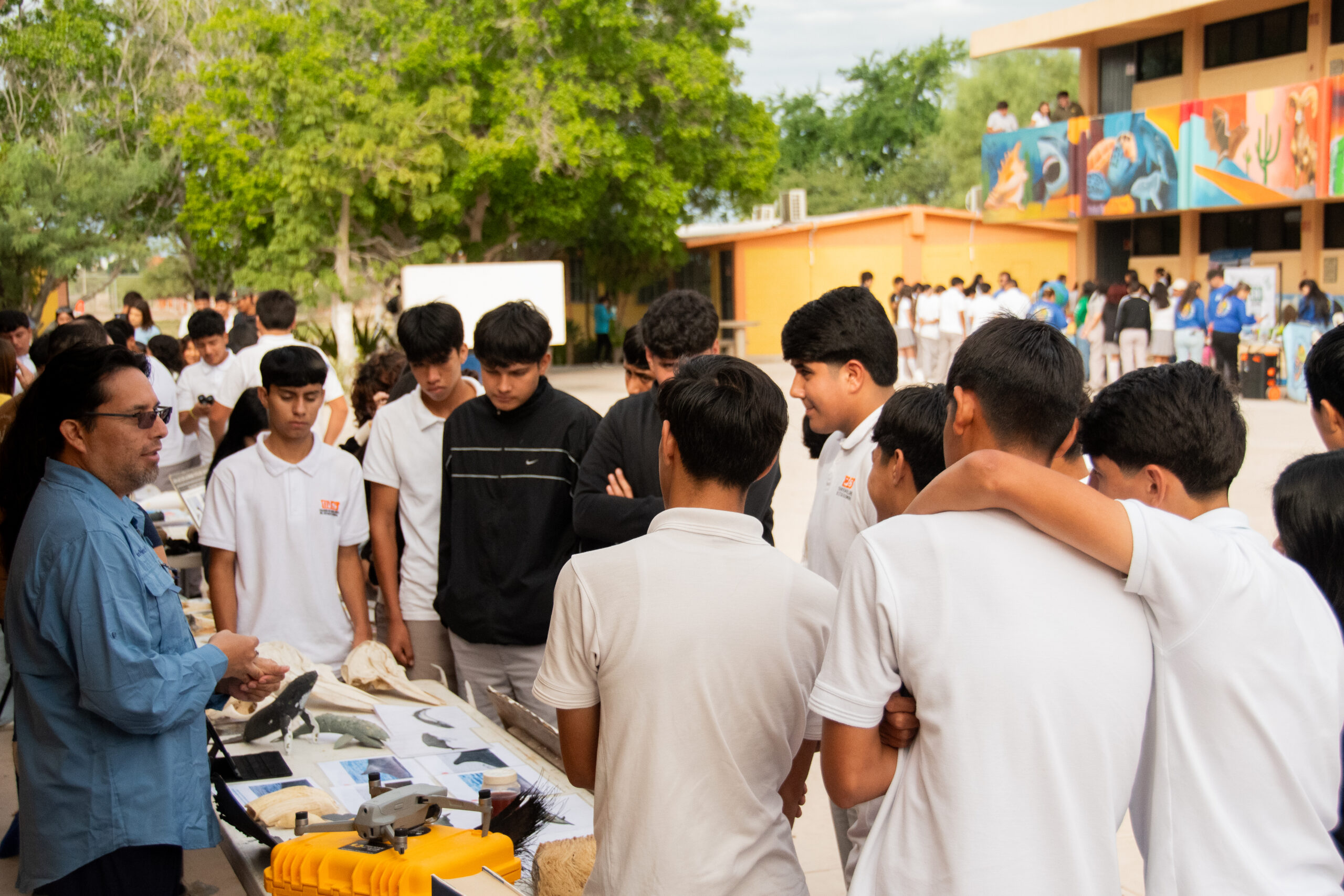
Marine Mammal Monitoring Program Coordinator Héctor Pérez presenting at the fair
Andrés Galindo/Kino Bay Center
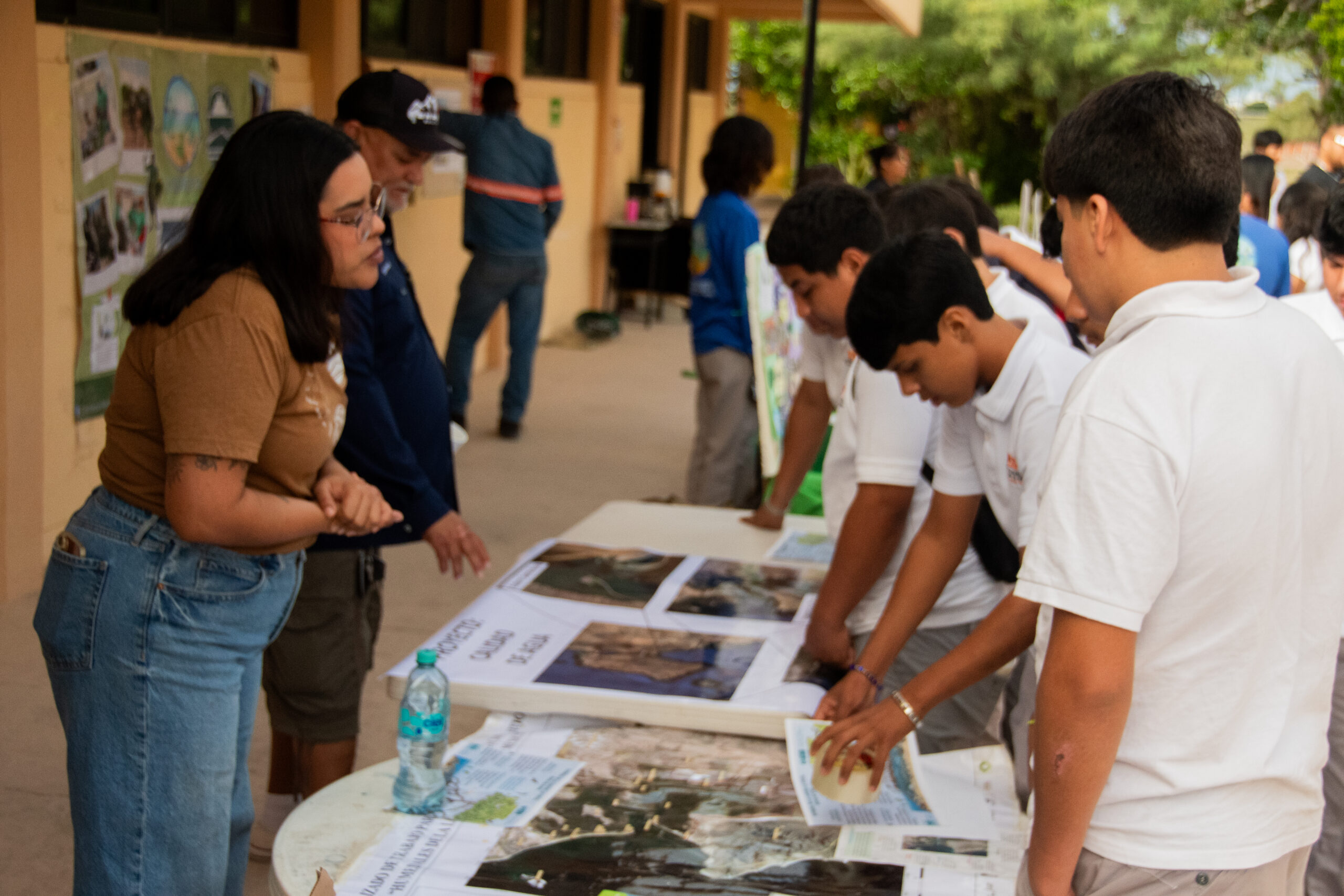
Wetland Conservation Coordinators Grisel Heredia and Ulises Becerra presenting at the fair
Andrés Galindo/Kino Bay Center
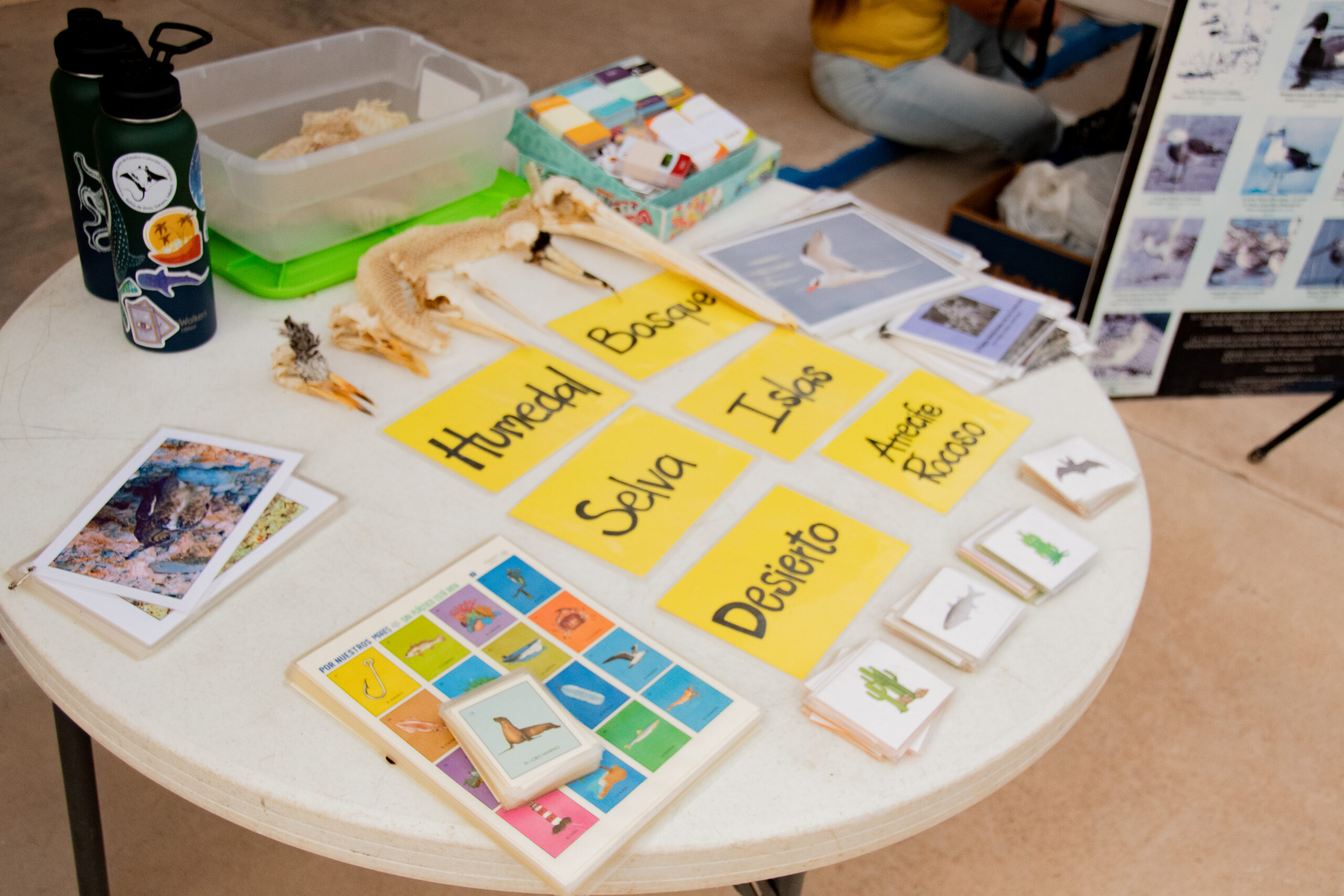
Educational games at the Environmental Education booth, including environmental lotería
Andrés Galindo/Kino Bay Center
Desert Tortoise Monitoring
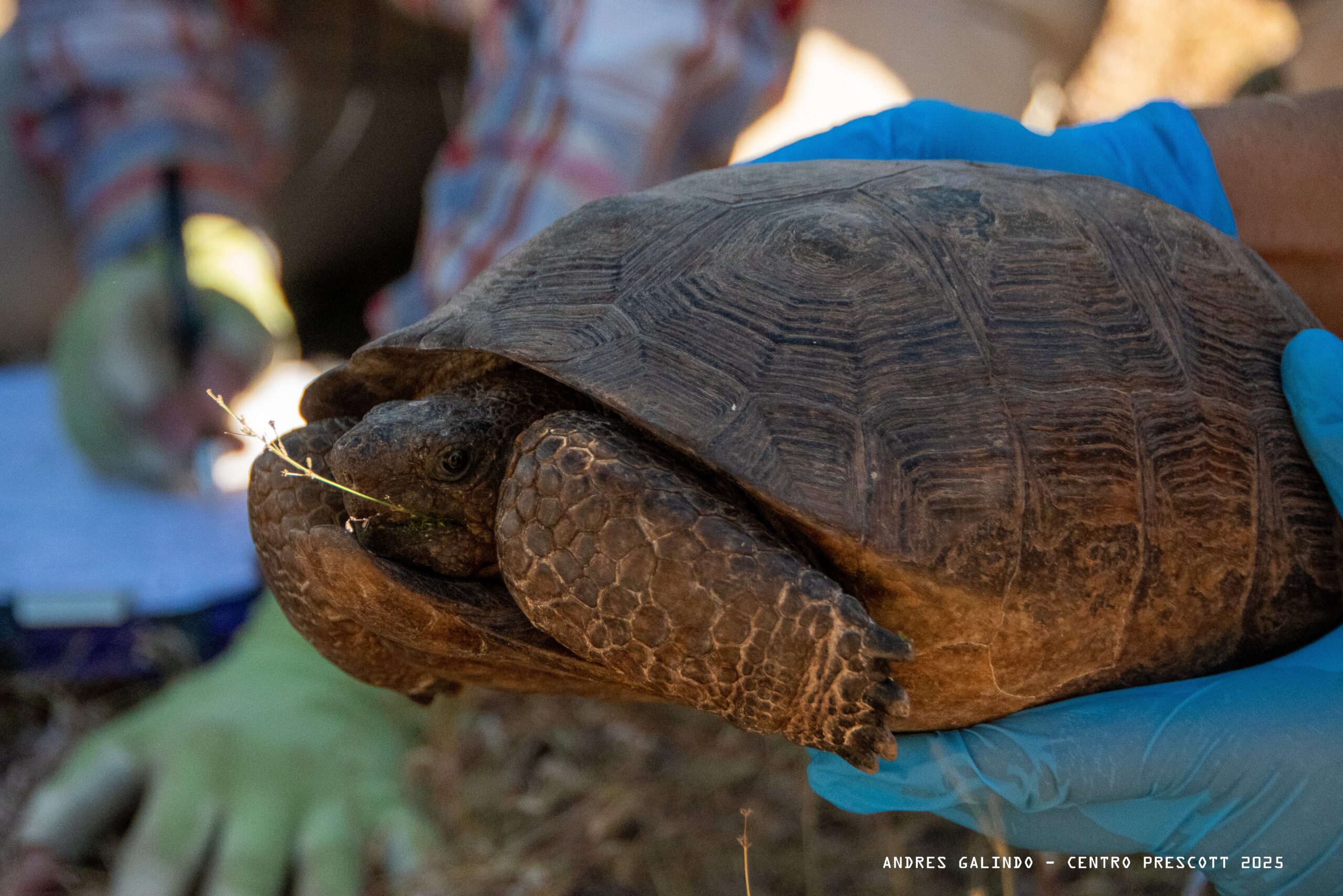
A desert tortoise snacking while being processed
Andrés Galindo/Kino Bay Center
In early November, the Center was honored to host one of our most ambitious field activities in our 35-year history: a 10-day field expedition to gather data on the populations of a protected and threatened desert tortoise species, the Morafka’s desert tortoise (Gopherus morafkai).
An international team of 40 biologists,
ten young people from the Comcaac Indigenous community, a film crew, and a healthy handful of our staff spent time camping and surveying the gorgeous and little-visited interior of Isla Tiburon, as well as a mainland study site across the Canal del Infiernillo.
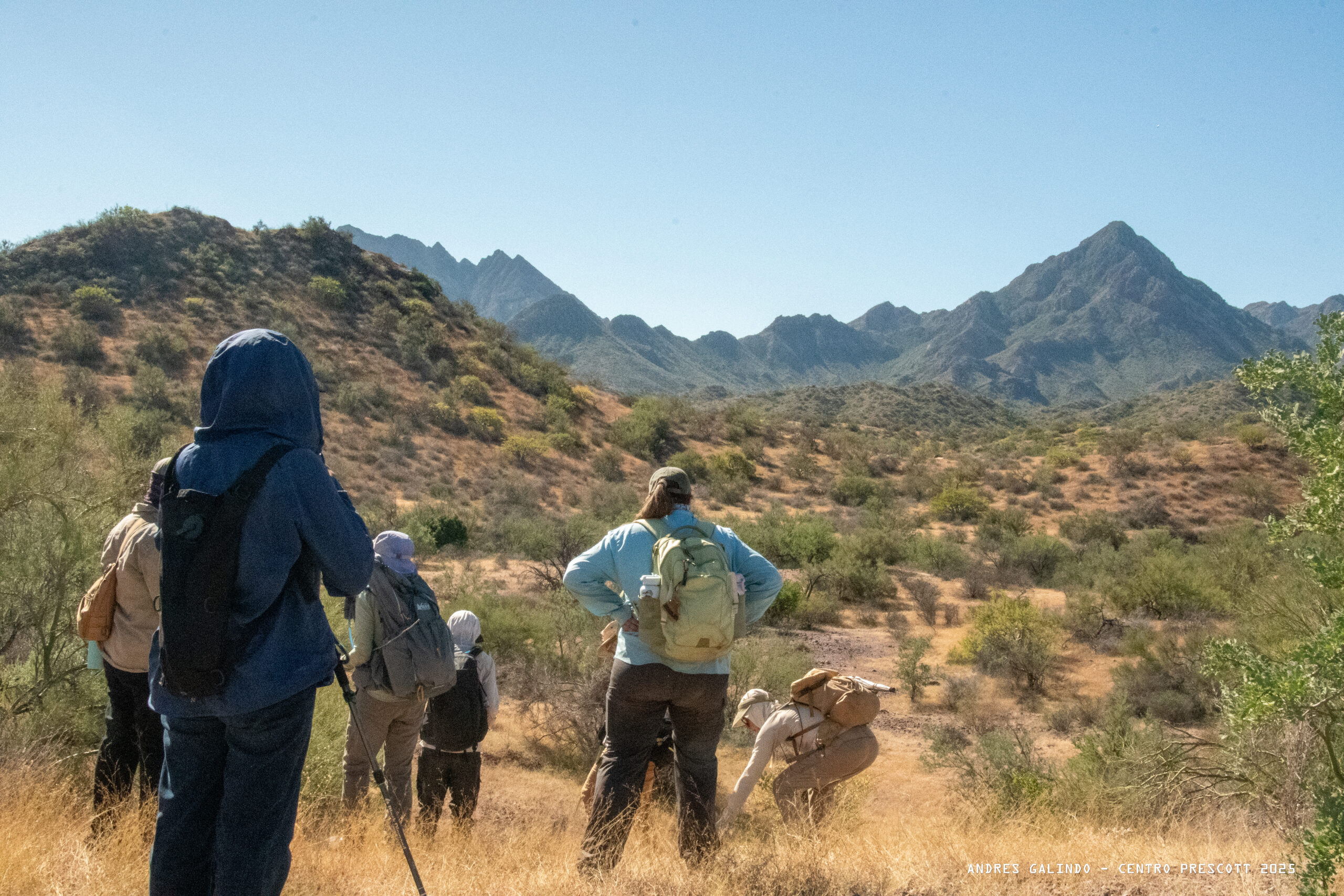
A desert tortoise monitoring squad overlooks the interior of Isla Tiburon
Andrés Galindo/Kino Bay Center
We found many tortoises, as well as an array of other species and a number of beautiful ancestral Comcaac sites. The logistics were complex (including sailing porta-potties back and forth to the island!), and the days were long, but complete with everything we needed to be healthy, happy, well-fed, and productive in the field.
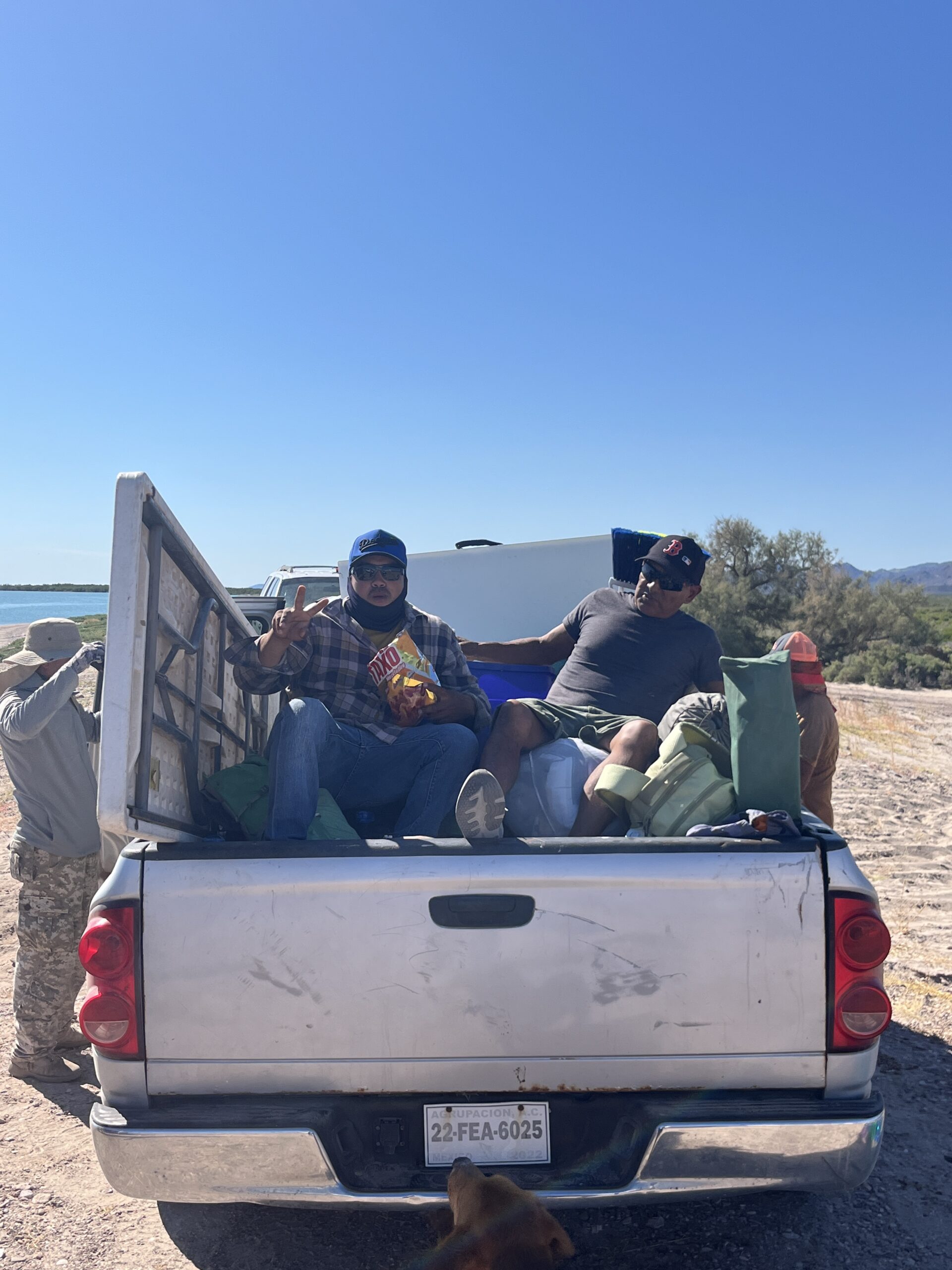
Cosme Damian Becerra and Julio Paredes on one of many trips to transport materials between the mainland and the Island's interior
Andrés Galindo/Kino Bay Center
The intense fieldwork repeated a 2001 study led by Mercy Vaughn. Results showed strong recuperation of the population on the island after a crash in the late 1990s, and the density confirms the importance of the island as pristine tortoise habitat. In addition to the data, we are very proud to report the emerging formation of a long-term tortoise monitoring team based in the Comcaac community—the only team of its kind in Mexico!
Many thanks to everyone who participated, and especially the Comcaac community for sharing their beautiful homeland with us!