


Click the sections below to read about highlights from Spring 2026!

RESEARCH AND MONITORING
Short-finned pilot whales return to the region!
By Héctor Pérez-Puig
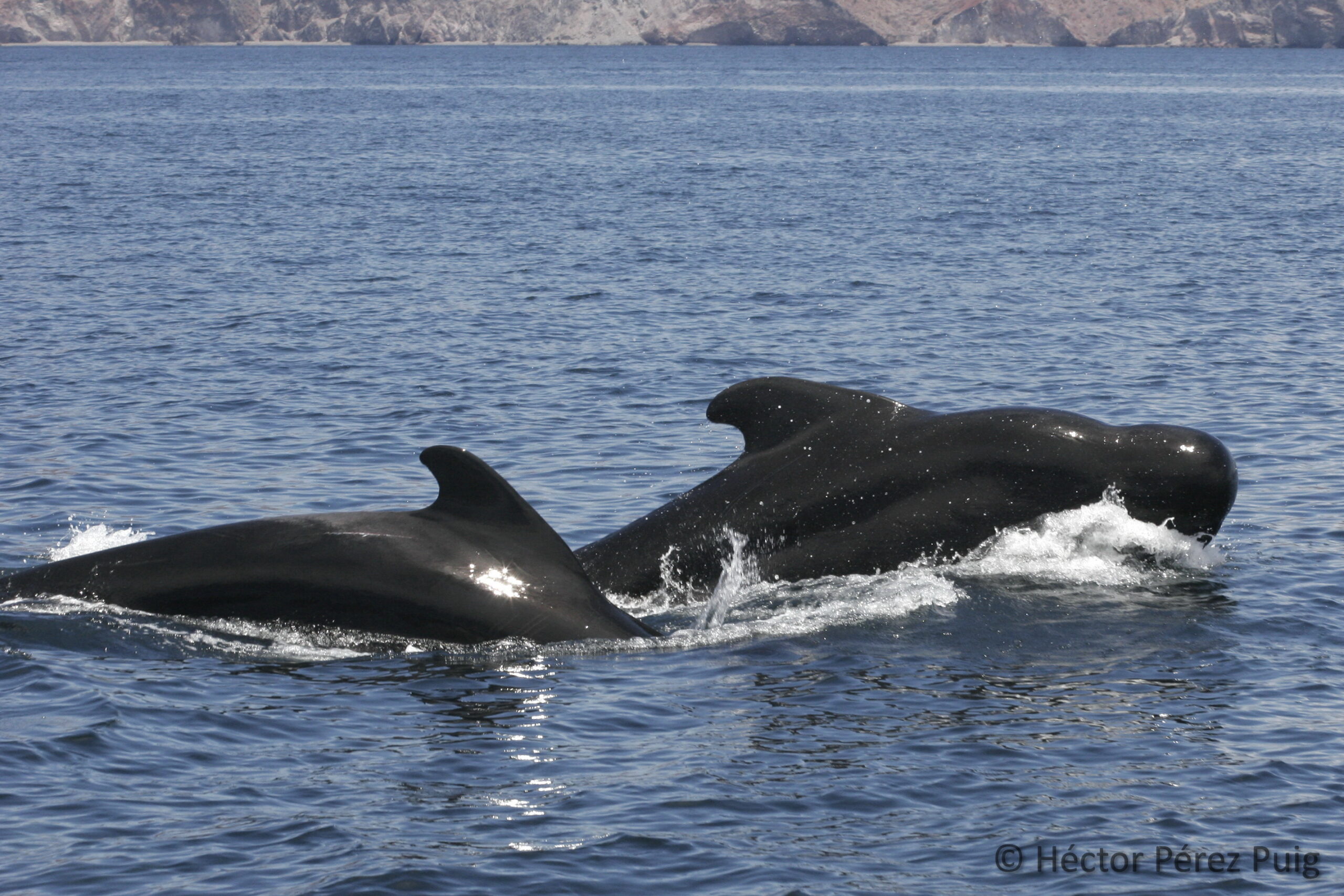
Short-finned pilot whales in the Gulf of California
Héctor Pérez-Puig/Kino Bay Center
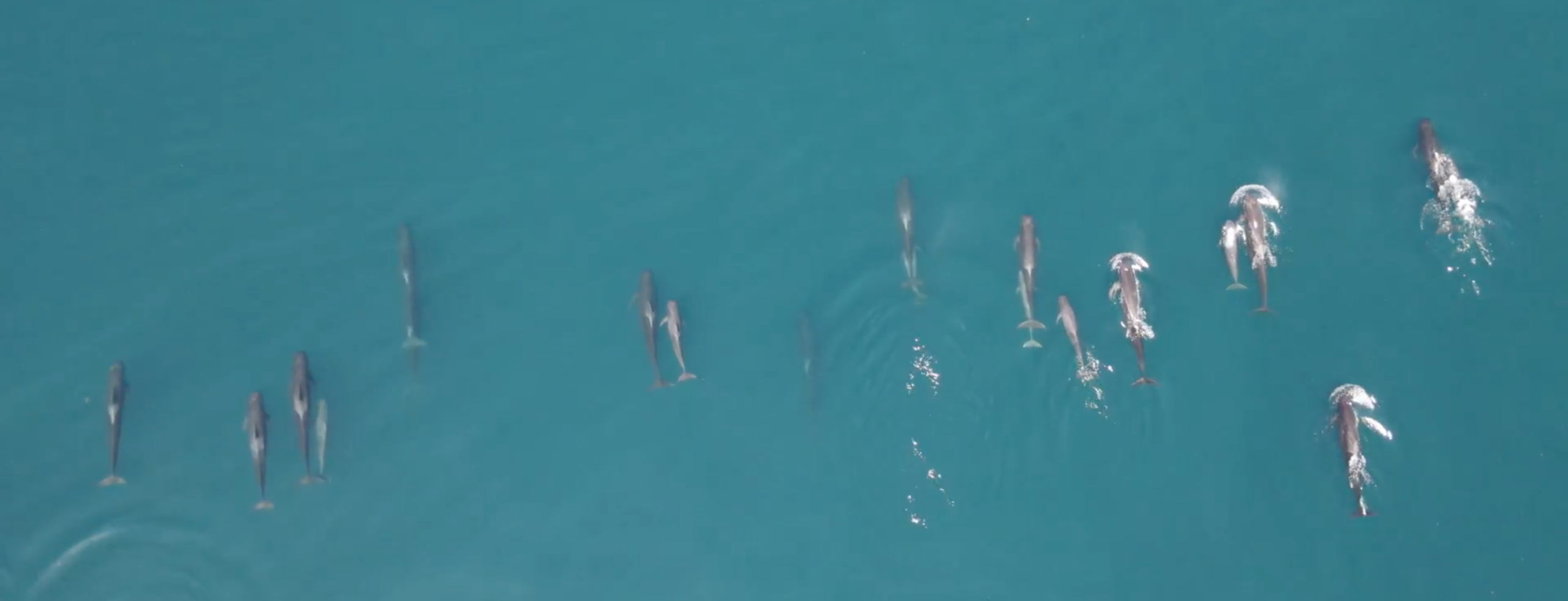
After almost 8 years of absence, the Short finned pilot whale (Globicephala macrorhynchus) returned to the Midriff Island Region of the Gulf of California, an event that marks a very special moment for the area. This is one of the 16 species of cetaceans registered in the zone. Although they belong to the dolphin family, pilot whales are distinguished by their bulbous head, their completely black color, and because males can grow up to be almost 19 feet long.
Pilot whales are teuthophagous, feeding almost exclusively on squid, including giant squid. Declines in cephalopod populations caused by changes in water temperature and overfishing likely contributed to the species’ disappearance from the Gulf, similar to what occurred with sperm whales.
Héctor Pérez-Puig/Kino Bay Center
Since 2018, only three sightings have been recorded in the region, two within the last six months. Most recently, the Marine Mammal Monitoring Program observed a group of approximately 80 individuals—including males, females, and offspring—moving slowly toward deeper waters, offering hope for the species’ return.
Record low waterbird productivity on Isla alcatraz
By Lauren Dolinski

View of Isla Alcatraz from Laguna la Cruz
Andrés Galindo/Kino Bay Center
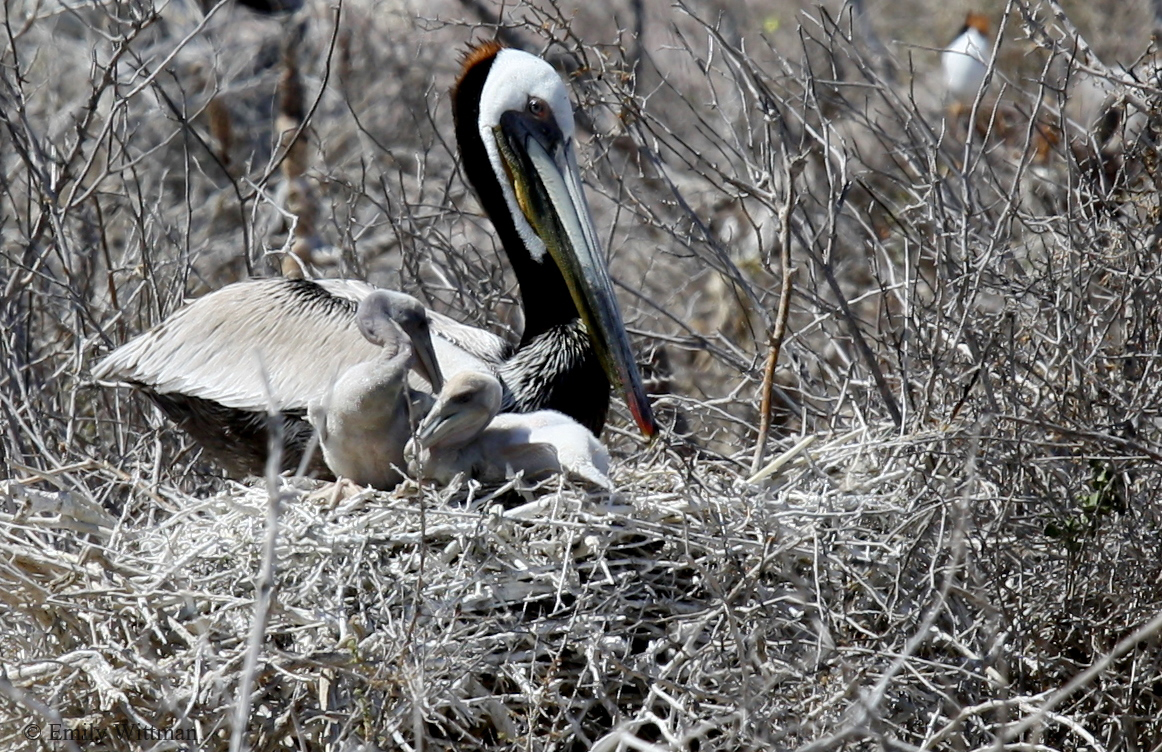
The sun breaks over the horizon and illuminates the town of Bahía de Kino, the beaches, and Alcatraz Island. On a bright May morning, the heat rolls in quickly. Normally, the island would be alive with movement and sound: pelican chicks squawking, great blue heron chicks beginning to fly, and yellow-footed gulls dive-bombing intruders while calling loudly to defend their offspring. But this year, the island feels unusually quiet.
Nesting brown pelican
Emily Wittman/Kino Bay Center
The birds of Alcatraz Island have experienced a difficult nesting season. Concern began in December when a drone incident caused widespread nest abandonment in the double-crested cormorant colony. Brown pelicans, which typically begin nesting in December or January, did not begin nesting until late February and repeatedly shifted nesting locations across the island.
By the end of March, researchers counted 91 pelican nests, but within a month only four remained.
This decline reflects the effects of El Niño conditions, which bring warmer ocean temperatures and reduce nutrient-rich upwelling, limiting food availability for seabirds and other marine species. During the 2014–2016 El Niño phase, pelicans did not breed on the island at all.
Fishing bats and Heerman’s gulls
Independent research on isla partida
By José Juan Flores Martínez
Fishing bat (Myotis vivesi)
Jose Juan Flores Martínez
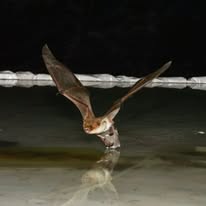
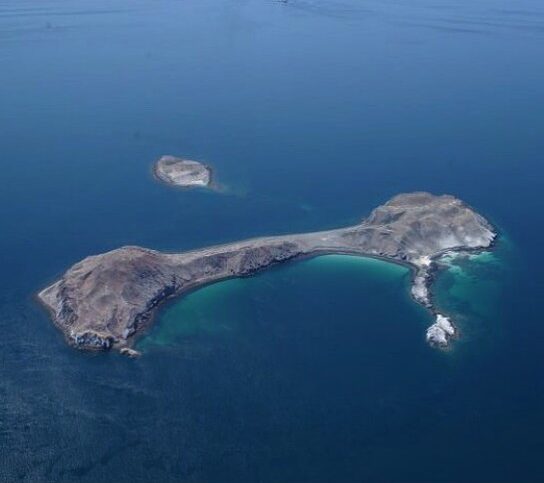
During a field expedition of approximately a week and a half on Isla Partida Norte in the Gulf of California, the research team conducted an intensive study focused on two key species: the fishing bat (Myotis vivesi) and the Heermann’s gull (Larus heermanni).
During a field expedition of approximately a week and a half on Isla Partida Norte in the Gulf of California, the research team conducted an intensive study focused on two key species: the fishing bat (Myotis vivesi) and the Heermann’s gull (Larus heermanni).
Isla Partida
Jose Juan Flores Martínez
Isla Partida
Jose Juan Flores Martínez
Activities included locating breeding colonies, carefully capturing individuals, and collecting biological samples such as blood and feces, essential for analyzing their health, diet, and associated microorganisms.
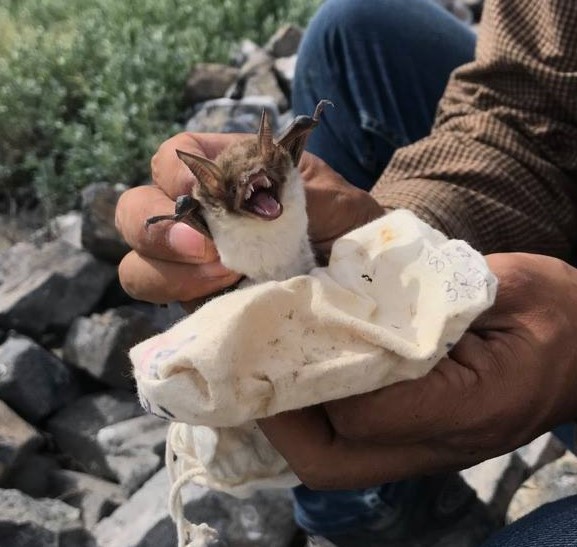
Handling a fishing bat
Jose Juan Flores Martínez
This work is part of a broader project aimed at understanding how factors such as climate change and food availability influence population dynamics. Beyond the scientific effort, the expedition also strengthened academic collaboration and provided valuable hands-on field experience in one of Mexico’s most important marine ecosystems.
Short-finned Pilot Whales Return to the Region!
By Héctor Pérez-Puig
Record low waterbird productivity on Isla alcatraz
By Lauren Dolinski
Fishing bats and Heerman’s gulls
Independent research on isla partida
By José Juan Flores Martínez