

Click the sections below to read about highlights from Spring 2026!
EXPERIENTIAL EDUCATION
Prescott College Spring Semester
By Irene Espinosa Gonzalez Garza & Iliana Dempsey-Hewett
Prescott College Spring Semester
By Irene Espinosa Gonzalez Garza & Iliana Dempsey-Hewett
Stanford University
The Quest for Sustainable, Community-based Livelihoods
By Maggie Poulos
Arizona State University
By Paloma Valdivia and Susanne Neuer
Environmental Education Final Projects
Local Elementary School Students Demonstrate Their Environmental Expertise!
By Andrés Galindo
Biocultural Explorations
Wild Islands, Rich Deserts
By Thomas L. Fleischner and Lisa Floyd-Hanna
Building upon field and theory developed in the Island Biogeography class (see previous newsletter), six Prescott College students engaged in two field courses during Spring Session D (March 9 – May 9). All three of the Spring courses were taught by Professor Irene Espinosa and Field Assistant (and P.C. graduate) Illiana Dempsey-Hewett.
Diversity of Marine Life
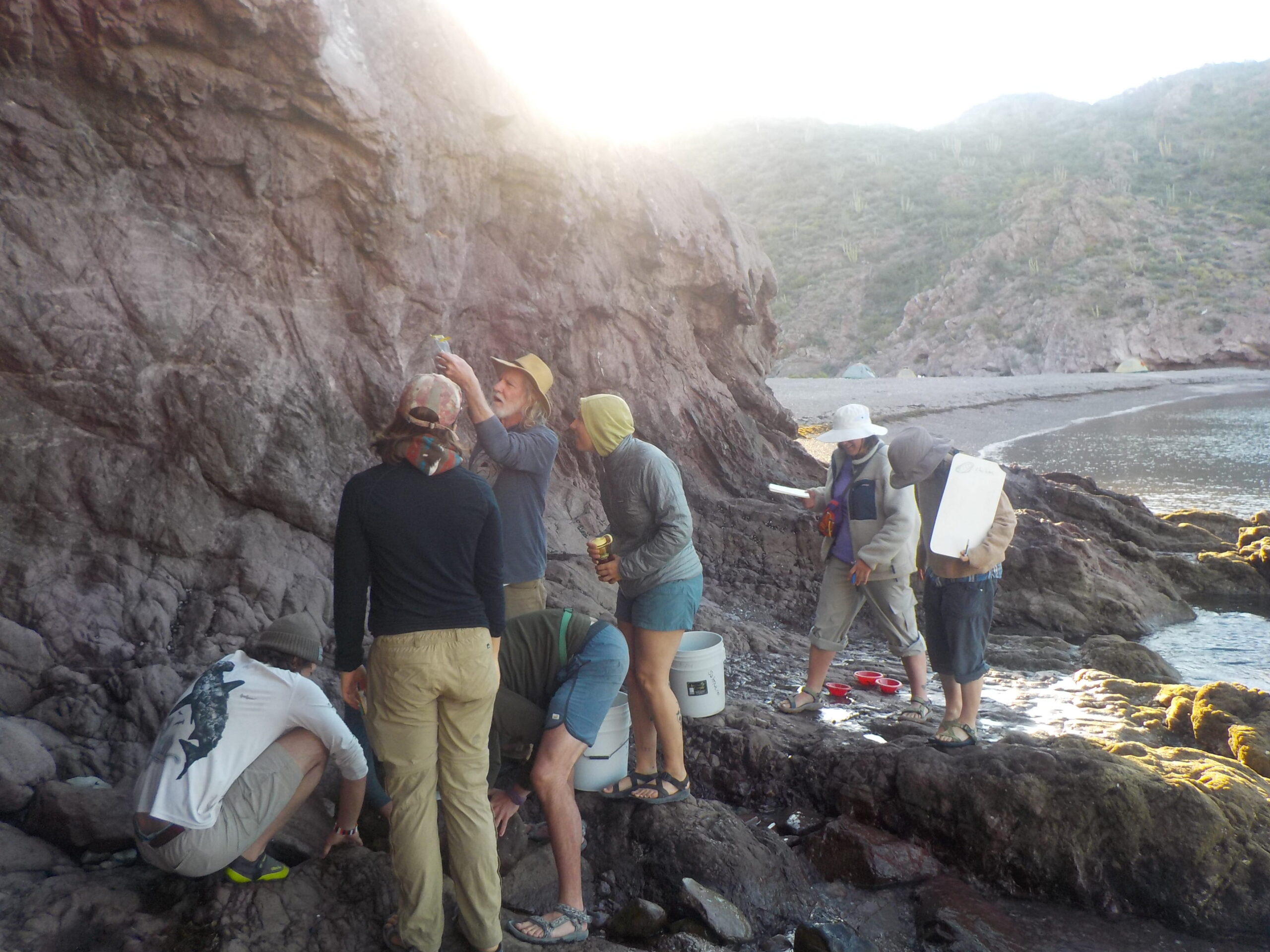
The Prescott College class with Ed Boyer in the intertidal zone of Playa Vencia
Irene Espinosa Gonzalez Garza/Kino Bay Center
Students in the course explored the rich diversity of marine life while engaging with current regional issues and hands-on activities that deepened their understanding of biological and ecological concepts. Through lectures, field excursions, and class presentations, they investigated the taxonomy, evolution, field identification, and ecology of halophytic plants, marine invertebrates, fishes, seabirds, and marine mammals of the Midriff Islands Region of the Gulf of California.
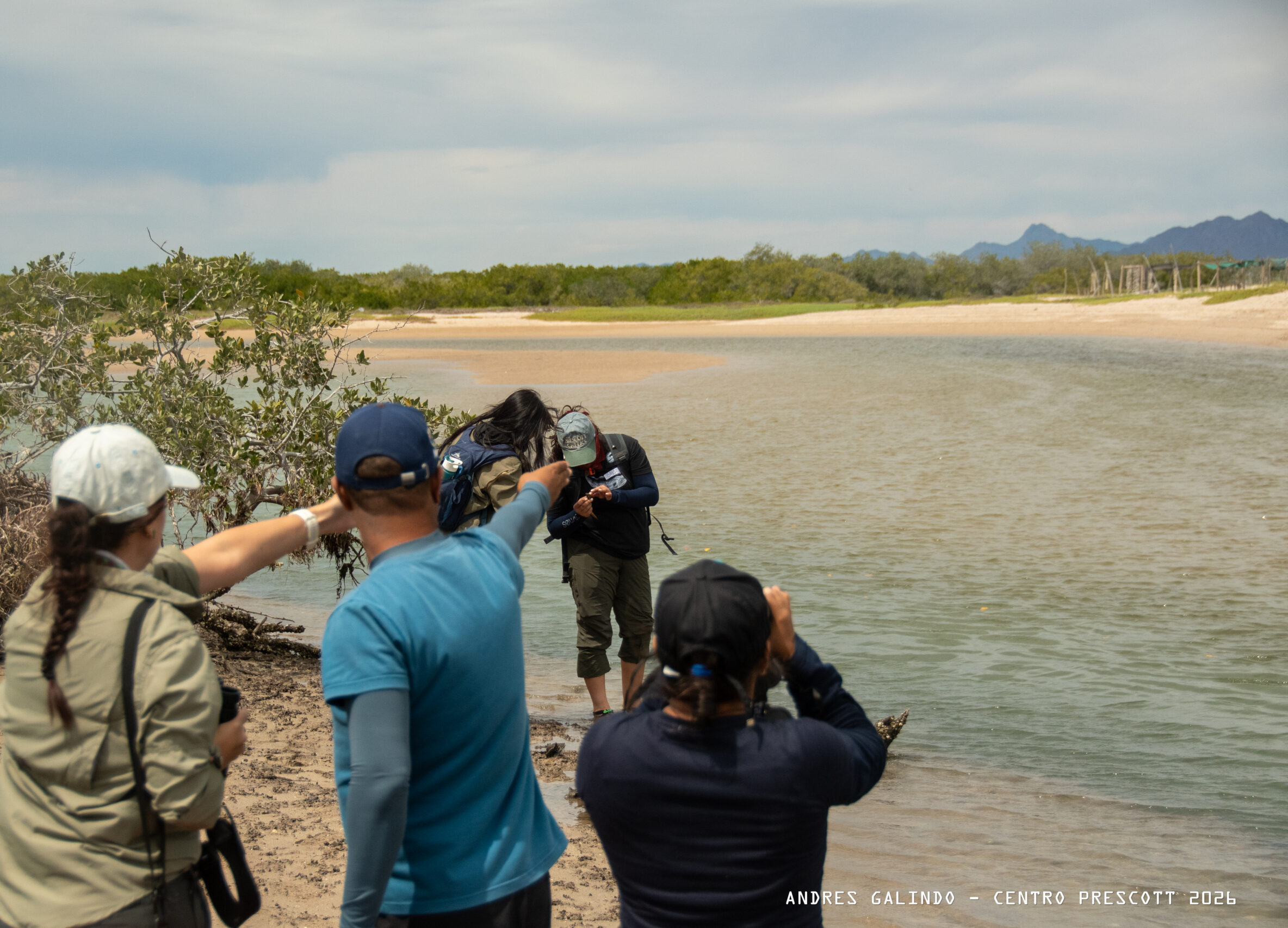
Students entered the course with a wide range of backgrounds and expertise, creating an environment of active peer-to-peer learning and collaborative discovery. Field outings required shared effort—from gathering field guides and equipment to collectively identifying species such as a Swainson’s Hawk and an Ink-Stained Dorid.
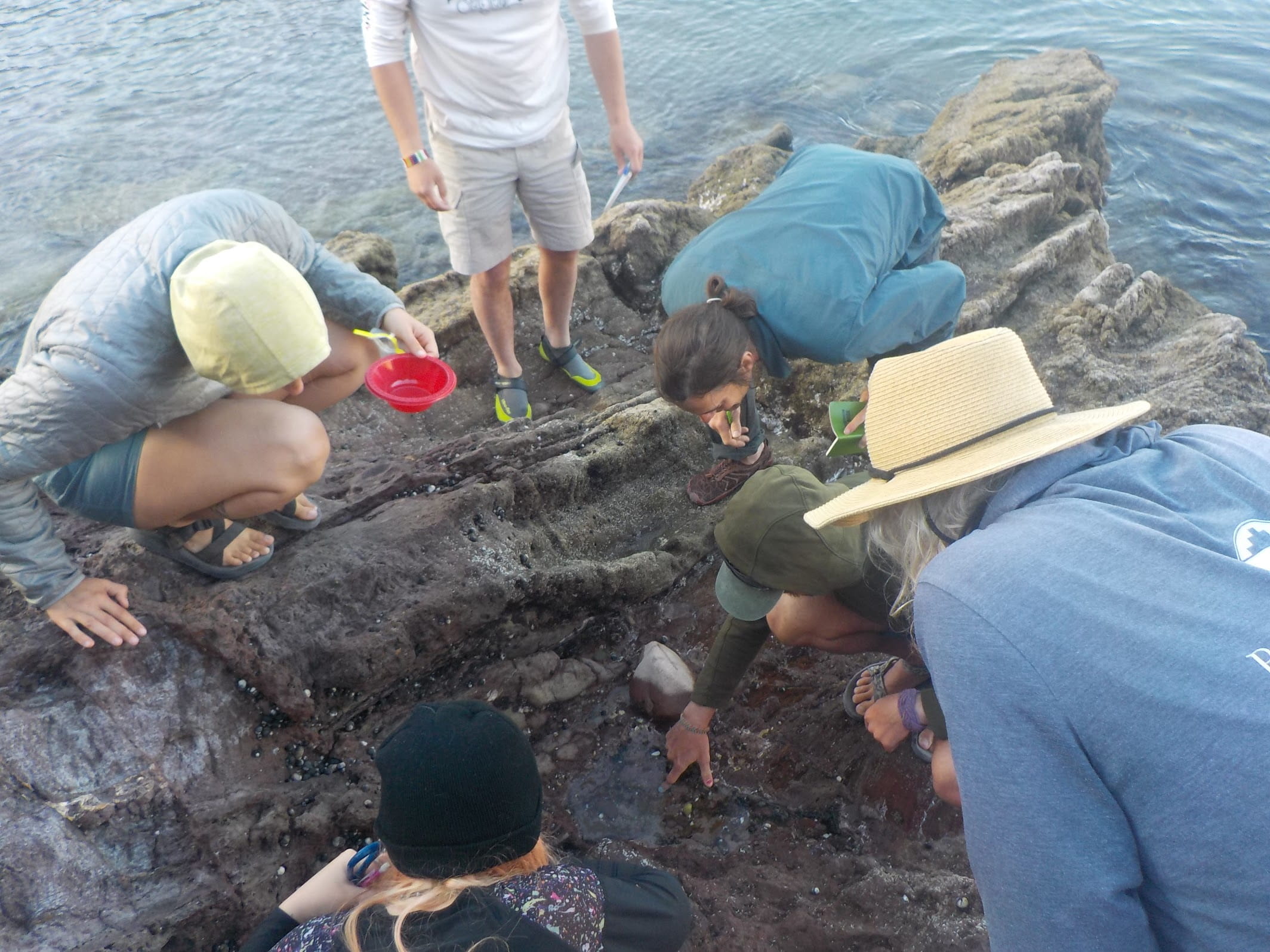
Searching for marine invertebrates
Irene Espinosa Gonzalez Garza/Kino Bay Center
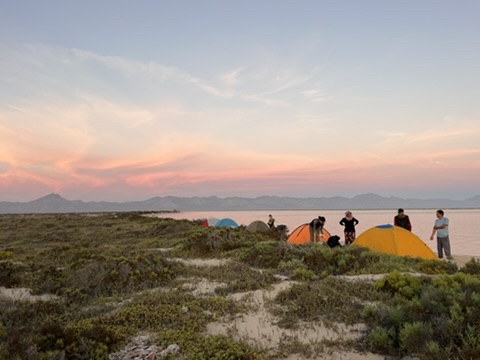
One highlight of the semester was a three-day camping trip to Playa Venecia led by emeritus professor Ed Boyer and focused on intertidal and subtidal ecosystems, bringing classroom concepts to life through direct experience in the field
Biological Field Methods
During the first two weeks of the Biological Field Methods course, students practiced a range of methodologies used by scientists, NGOs, and government agencies to collect field data. Visits to wetlands, intertidal zones, the open ocean, and desert habitats introduced students to avian point counts, waterbird and marine mammal monitoring, botanical surveys, transects, diversity plots, and small-mammal trapping.
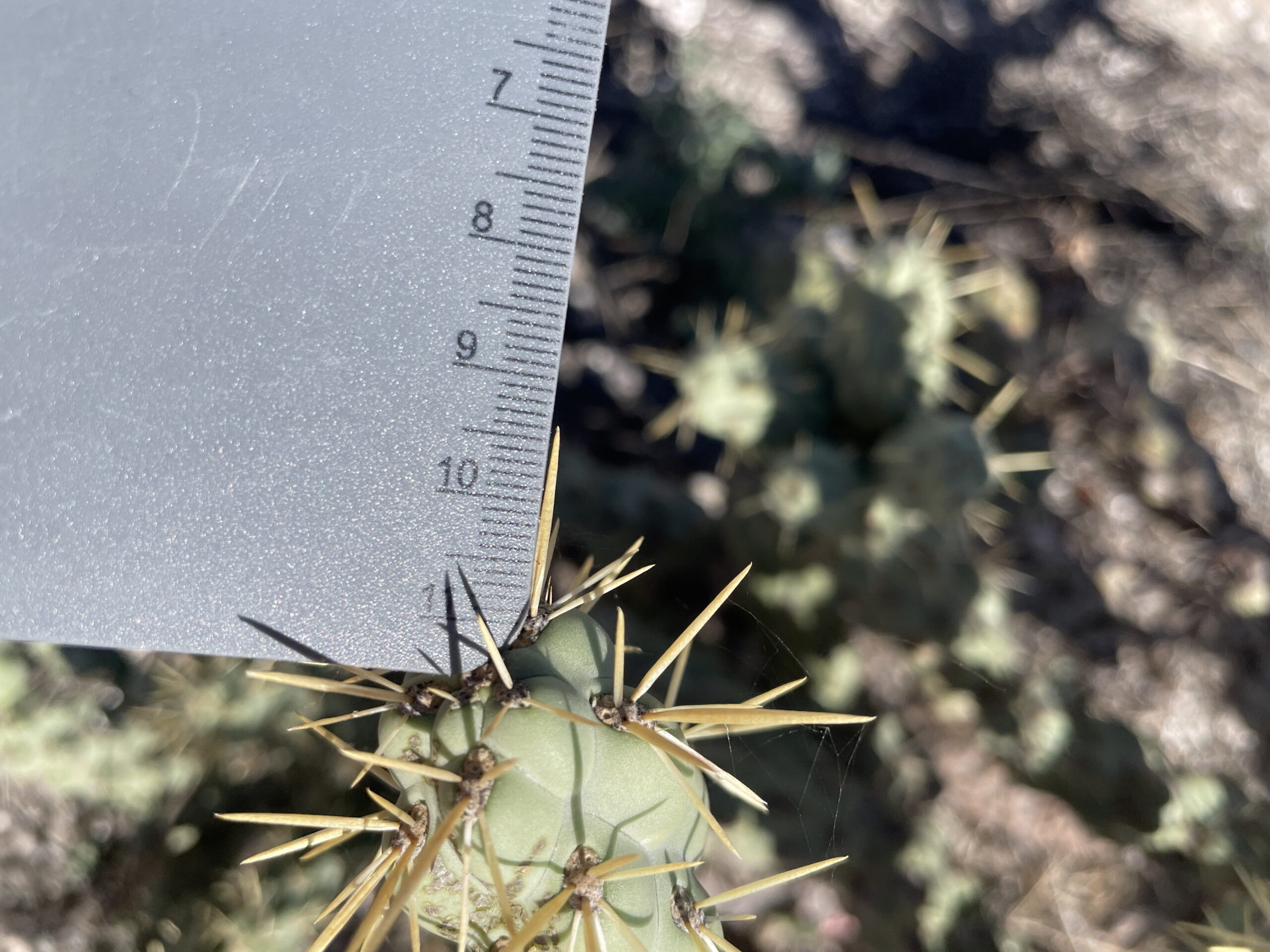
Identifying cacti on Isla Tiburon
Irene Espinosa Gonzalez Garza/Kino Bay Center
Drawing on these new skills, students developed scientific questions and designed projects that contribute to ongoing research and conservation efforts in the region. One small team spent several days collecting data at Estero Santa Rosa before analyzing and presenting their findings to classmates.
A highlight of the course was a camping trip to Isla Tiburón, where Comcaac naturalist Alex Diaz led the group on a hike across part of the island. Students learned about desert plants and observed local wildlife, including a Red-tailed hawk carrying a snake in its talons.
Drawing on these new skills, students developed scientific questions and designed projects that contribute to ongoing research and conservation efforts in the region. One small team spent several days collecting data at Estero Santa Rosa before analyzing and presenting their findings to classmates.
A highlight of the course was a camping trip to Isla Tiburón, where Comcaac naturalist Alex Diaz led the group on a hike across part of the island. Students learned about desert plants and observed local wildlife, including a red-tailed hawk carrying a snake in its talons.
Identifying cacti on Isla Alcatraz
Irene Espinosa Gonzalez Garza/Kino Bay Center
Biocultural Explorations
Wild Islands, Rich Deserts
By Thomas l. Fleischner & Lisa Floyd-Hanna
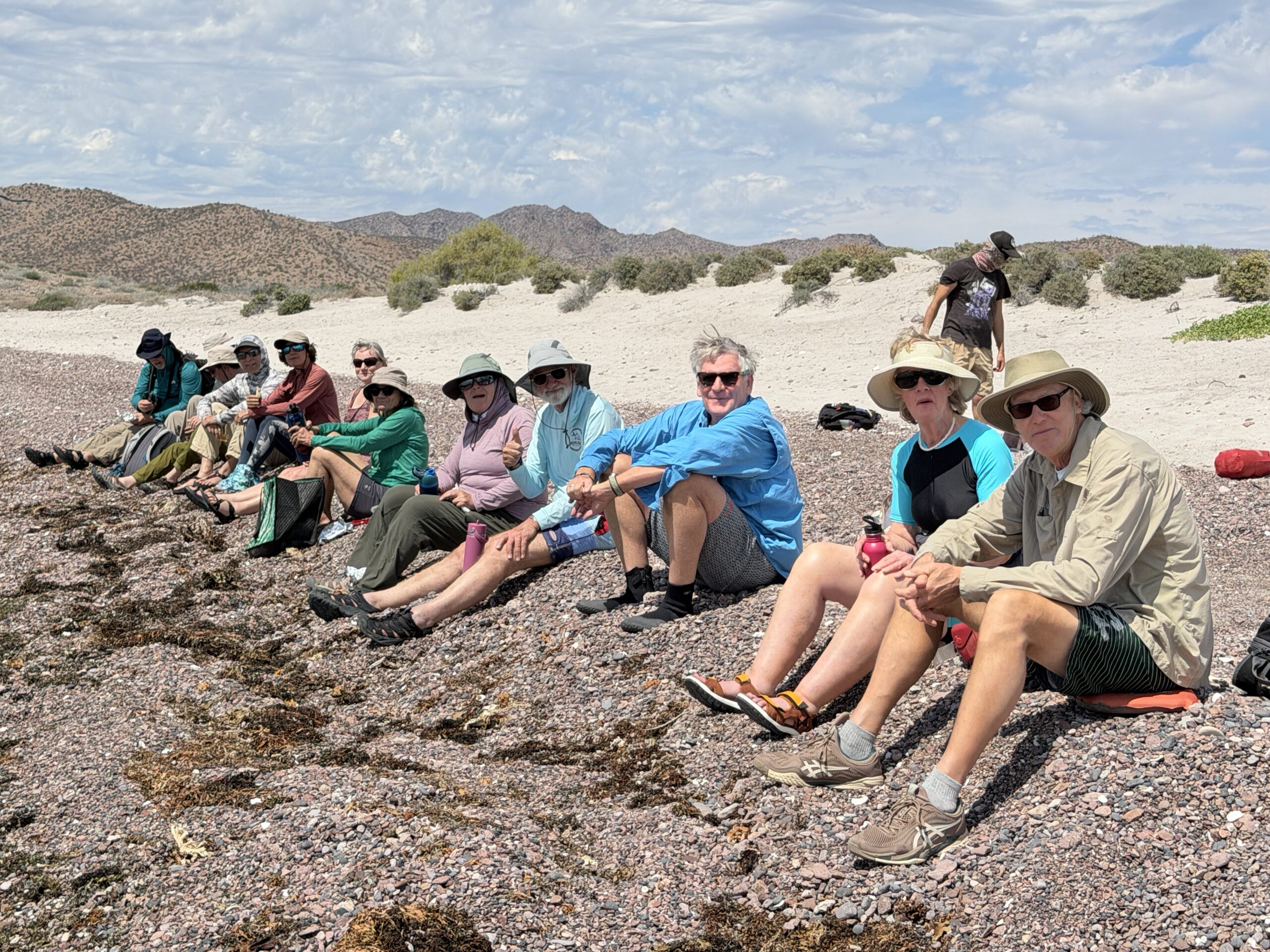
Natural History Institute on Isla Tiburon
Natural History Institute
Leaping whales; flocks of sea birds; desert plants in flower; cardóns reaching toward the sky; herons striding across estero mudflats, meaningful interaction with members of the Comcaac community; a tight-knit group of learners sharing laughter; sunsets spangling the Gulf of California. These are among the classic ingredients of a Kino Field program.
We led field courses throughout our shared fifty-plus years of teaching at Prescott College, separately and together. More recently, we’ve been co-leading week-long programs under the auspices of the Natural History Institute and the Kino Bay Center. In April, we had another wonderful experience—the fifth such collaboration between the two organizations, leading a group of adult learners from across the US.
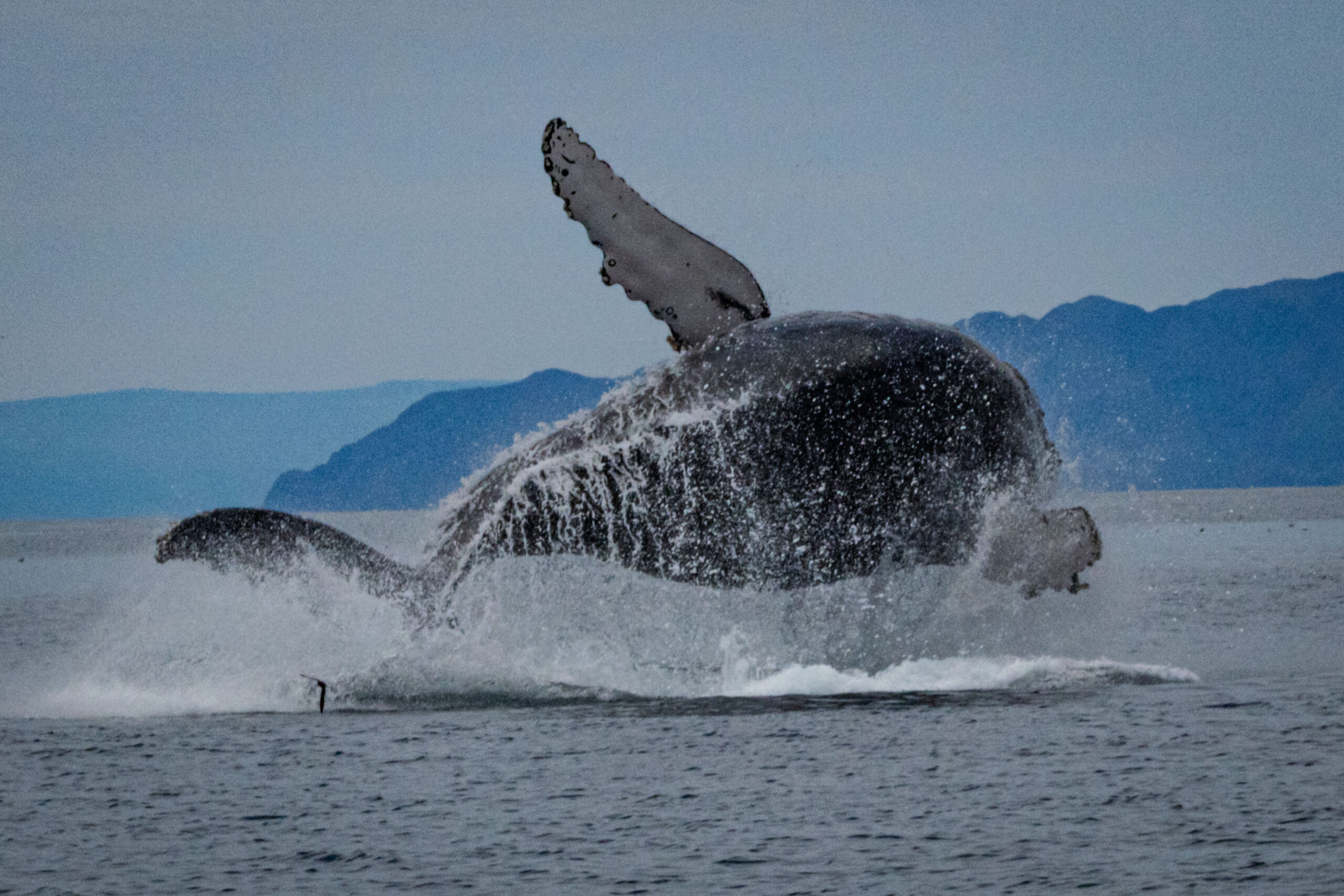
Humpback whale leaping out of the Gulf of California
Natural History Institute
The group, composed of biologists, teachers, government policy-makers, small businessmen, conservationists, and more, echoed the sounds of joy at discovery that we became accustomed to throughout our years teaching PC field courses here.
Stanford University
The Quest for Sustainable, Community-Based Livelihoods
By Maggie Poulos
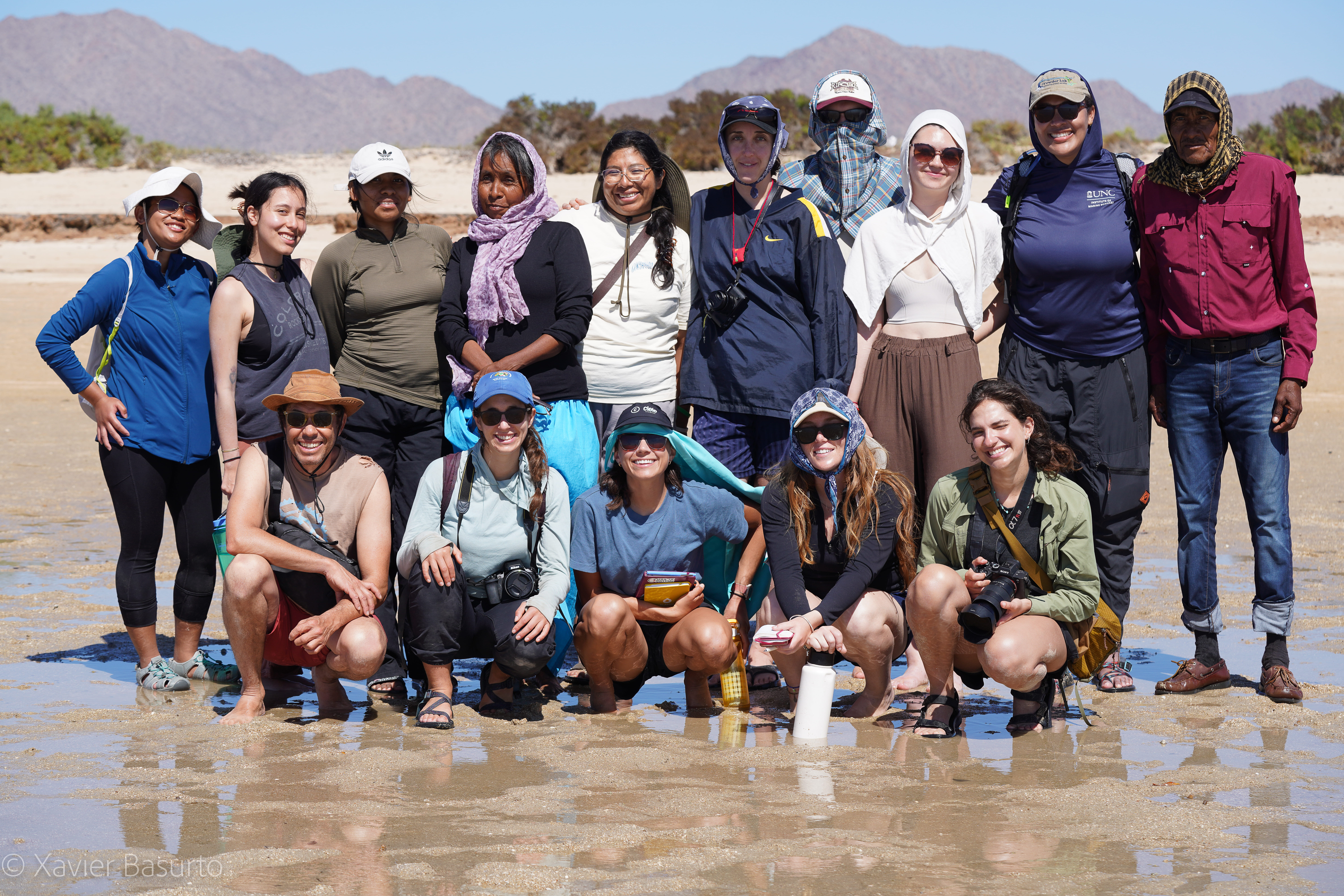
Stanford students with members of the Comcaac community in Comcaac territory
Stanford University
In March 2026 the Stanford University course “The Quest for Sustainable Community-Based Livelihoods” visited Prescott College’s Kino Bay Center and fishing communities across the Gulf of California. Led by Professor Xavier Basurto and Lecturer Nicole Franz, ten graduate students participated in an immersive field experience to better understand the social and environmental elements of coastal resource governance in Mexico.
The class traveled to local towns, including Bahía de Kino, Puerto Libertad, Desemboque, and Isla Tiburón, to learn from Indigenous Comcáac, fishers, and locals about the relationship between their livelihoods and their coastal home.
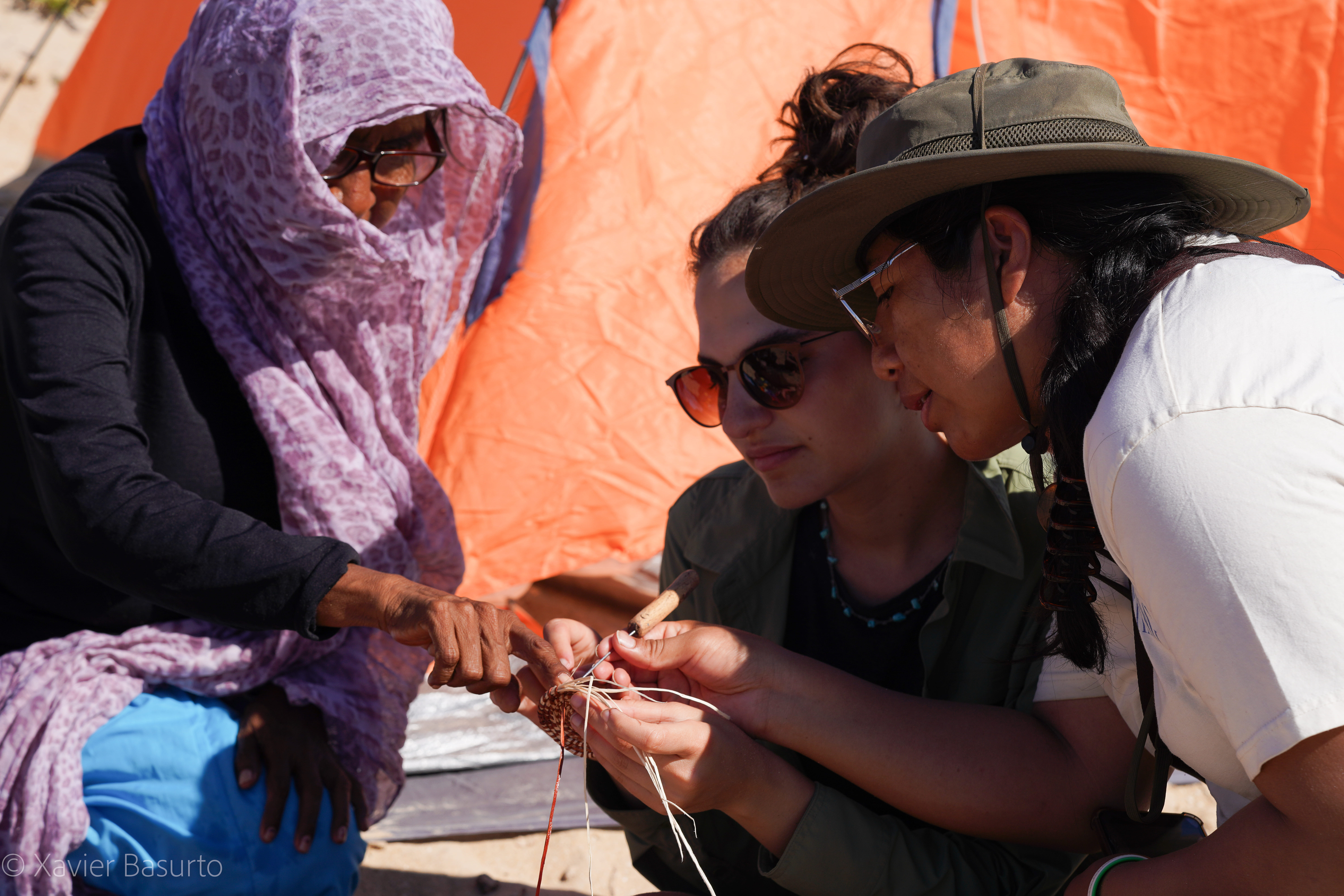
A Comcaac artisan demonstrating her process to Stanford students
Stanford University
After ten weeks of in-class learning in California, students took this unique opportunity to connect the academic literature around livelihoods and conservation practice to lived realities on-the-ground. From reflecting with classmates and community members under the stars, to singing beside a campfire, fishing for clams, snorkeling with sea lions, and boating alongside dolphins, students emerged with a deep appreciation for the biocultural richness of the Gulf of California region.
Environmental Education Final Projects
Local Elementary School Students Demonstrate Their Environmental Expertise!
By Andrés galindo
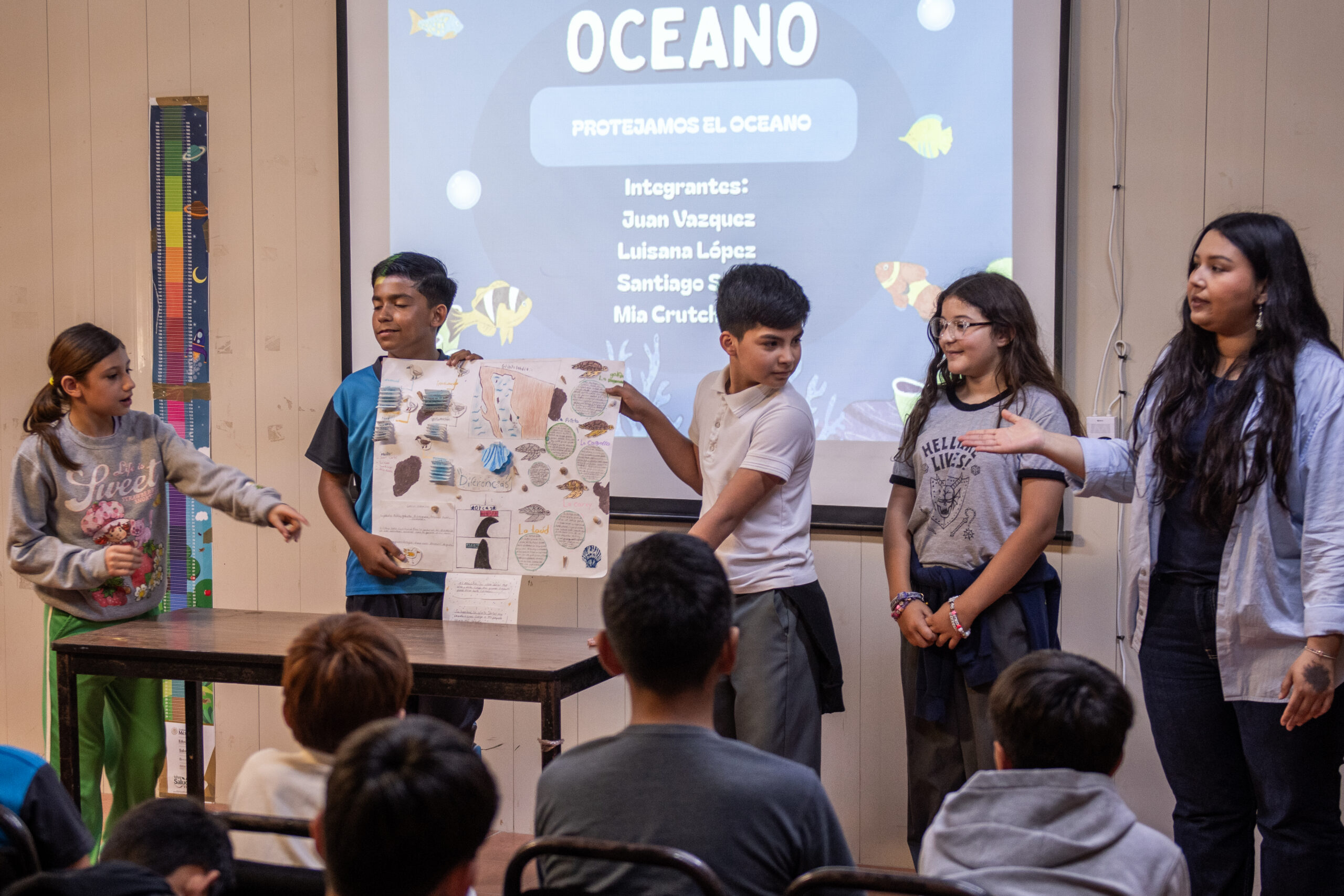
PEA coordinator Johana Nieblas presenting with 6th grade students
Andrés Galindo/Kino Bay Center
This 20th of March, the culmination of a semester’s worth of weekly environmental education took place as students from the local elementary school presented their final projects. 4th and 5th grade kiñenos were instructed to research a specific environmental topic of their choosing and then were given the task of presenting their findings to their peers in whichever format they wanted to. Presentation formats included models, videos, slideshows, trifolds, and informational posters.
Students who successfully completed the entire course and submitted their final project will be able to participate in a field outing to Isla Alcatraz, known by the Environmental Education Program (EEP) as Reto Alcatraz. The outing aims to show students the hands-on applications of the environmental lessons they were given throughout the semester.
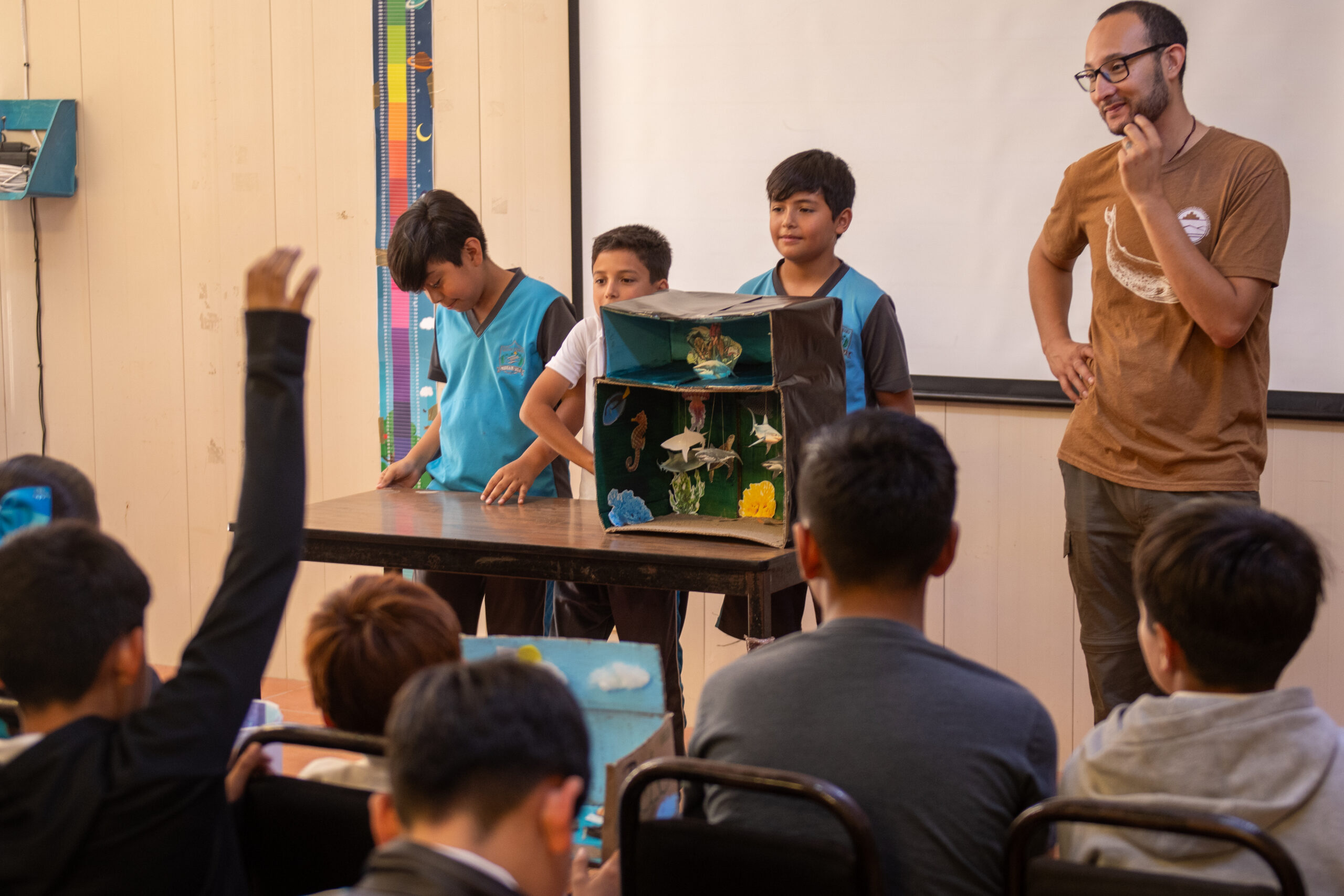
PEA coordinator Edgar Magdaleno presenting with 4th grade students
Andrés Galindo/Kino Bay Center
By teaching local students about the vast abundance the environment that surrounds them has to offer, EEP teachers Johana Nieblas and Edgar Magdaleno are helping form future environmentally conscious generations that are well equipped with the proper knowledge to protect and fight for the land they live on.
Arizona State University
By Paloma Valdivia & Susanne Neuer
From March 6–10, 2026, three students and two instructors from Arizona State University’s School of Ocean Futures participated in the Center’s Biocultural Exploration Program as part of a pilot project and class on the Sea of Cortez.
Beyond learning about the extraordinary biodiversity and marine ecosystems of this globally significant region, the experience offered something far deeper: the opportunity to connect with local and Indigenous people and their profound sense of place relationships.
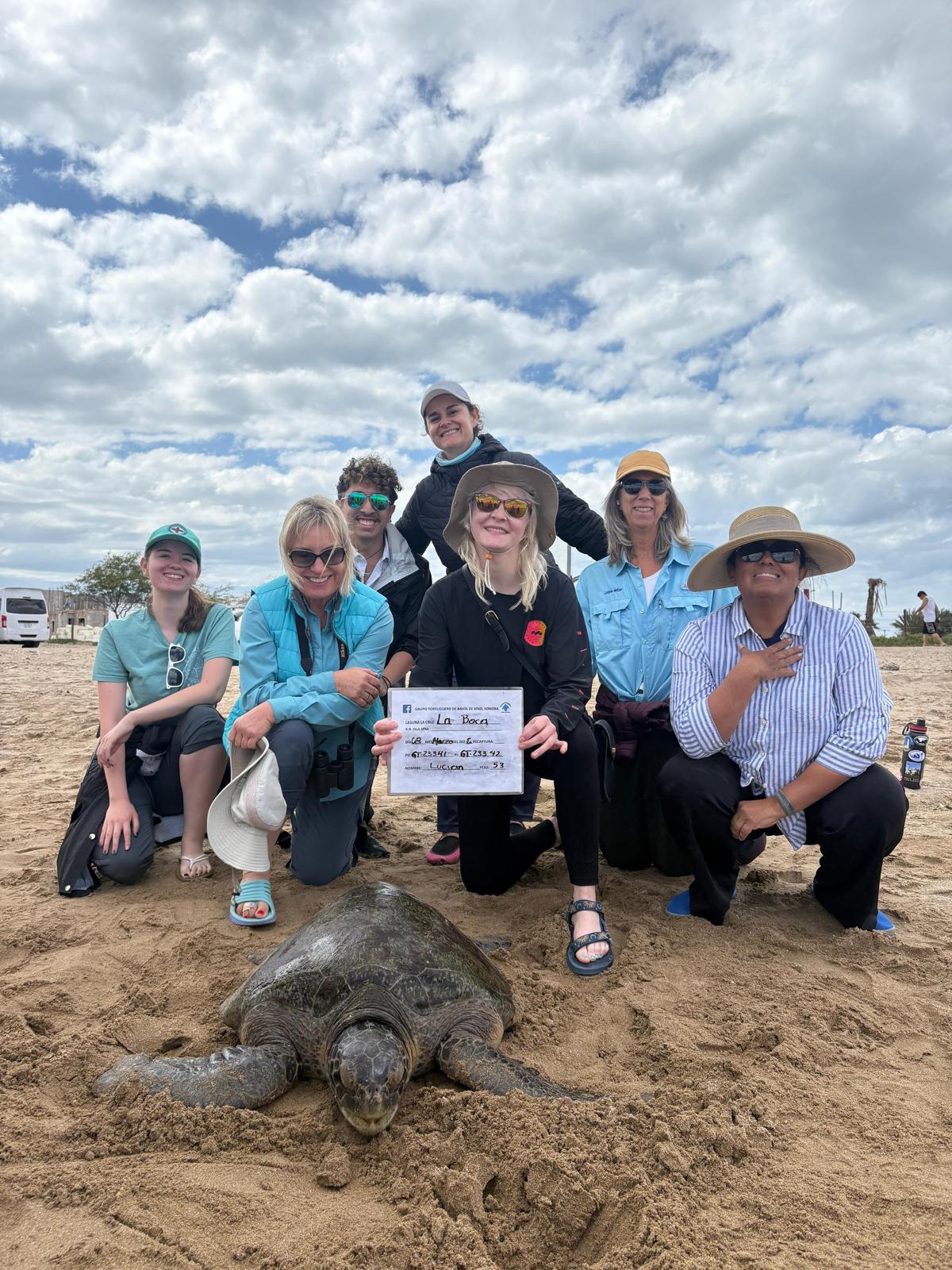
ASU students monitoring turtles in Laguna la Cruz
Ulises Rancaño/Kino Bay Center
ASU students monitoring turtles in Laguna la Cruz
Ulises Rancaño/Kino Bay Center
Through conversations, field experiences, and cultural exchanges, students learned not only about traditional ecological knowledge, medicinal plants, and sea turtle conservation, but also about community-based conservation and Comcaac ways of understanding the land and sea as living relatives rather than resources alone.
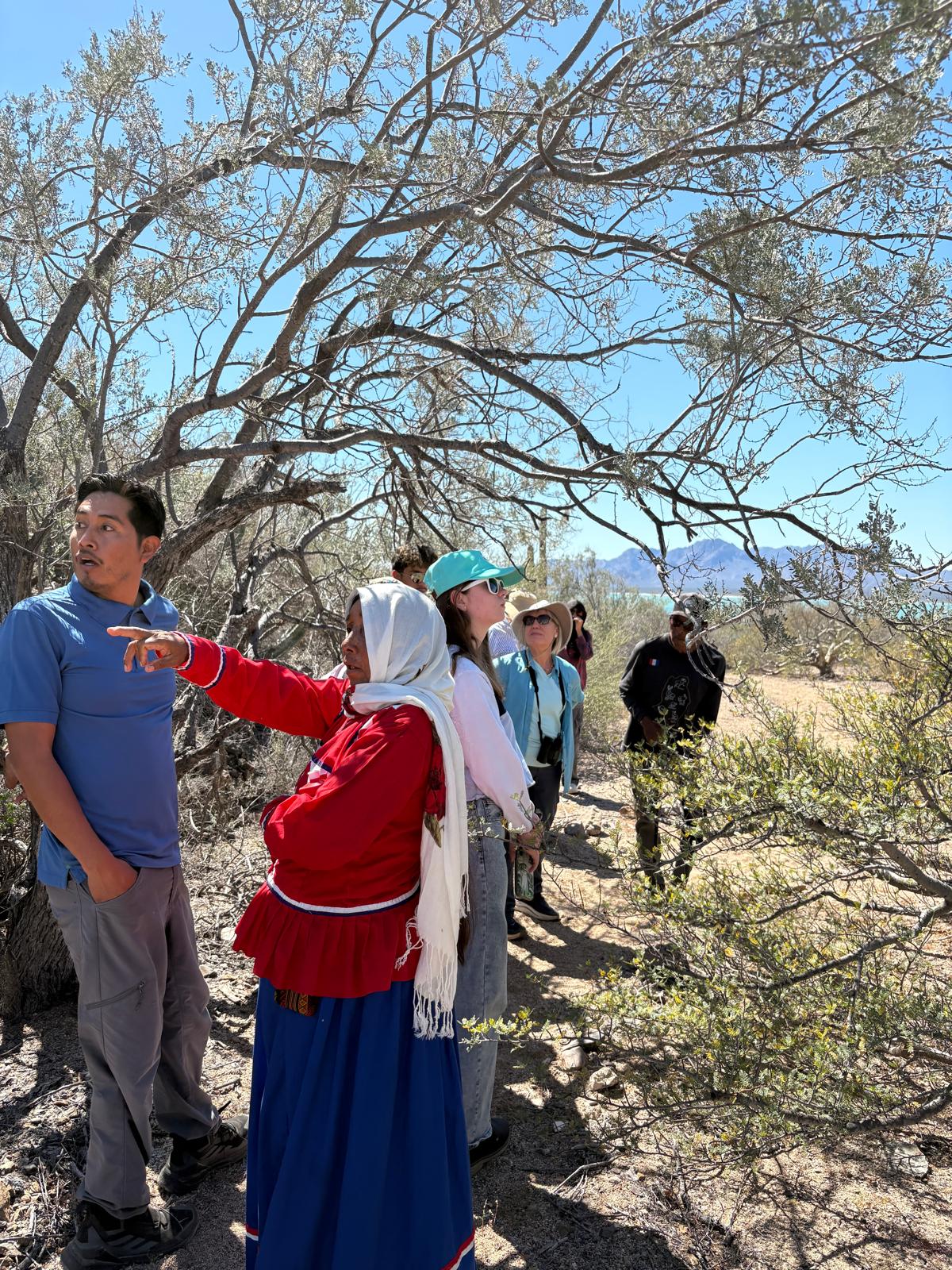
ASU students in Comcaac territory with ICCP coordinator Aaron Barnett
Ulises Rancaño/Kino Bay Center
The journey became a powerful reminder that conservation is inseparable from culture, identity, and community. Students returned inspired, humbled, and with a renewed sense of the importance of biocultural conservation. After returning to Arizona, each student completed a research project with guidance from a Kino Bay Center mentor.